How to Choose a Farm Tractor (Size, Class & Checklist)
By Roy Messiah · Last updated: 19 July 2026
Top pick tractors in this guide
The bottom line
Choose a farm tractor by matching size class to your heaviest regular job — not your worst day once a year. Start with acreage and terrain, list the implements you will run weekly, then pick sub-compact, compact, or utility class and verify hitch, PTO, and loader capacity from OEM specs. Dealer support and a complete attachment package matter as much as the badge on the hood.
Numeric specs in pick tables come from manufacturer pages in our verified database — not from AI-generated text.
How size classes compare
Tractor size classes (typical range)
Sub-Compact
1–5 acres
Loader and mower
Compact
5–20 acres
Bush hog and tiller
Utility
15+ acres
Hay and heavy implements
Illustrative: match class to property size and implement load, not horsepower alone.
Top picks
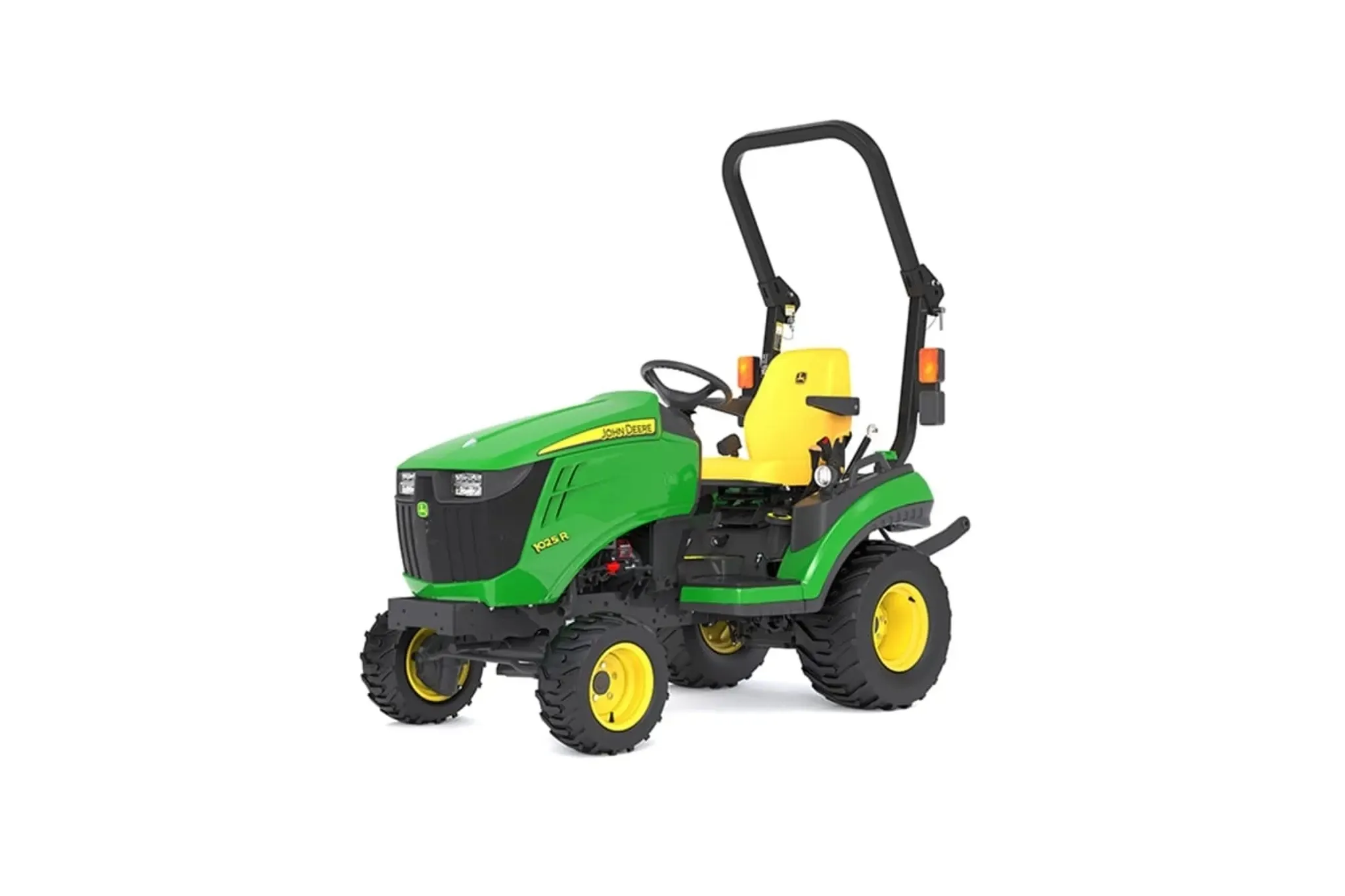
Pick 1
John Deere 1025R
Sub-Compact
Strong starting point when you are choosing a first tractor for light acreage chores — maneuverable, widely supported, and easy to pair with a mid-mount mower and loader.
Verified specifications for John Deere 1025R Engine horsepower 23.9 HP Operating weight 1,556 lbs Rear hitch lift @ 24″ 758 lbs @ 24″ 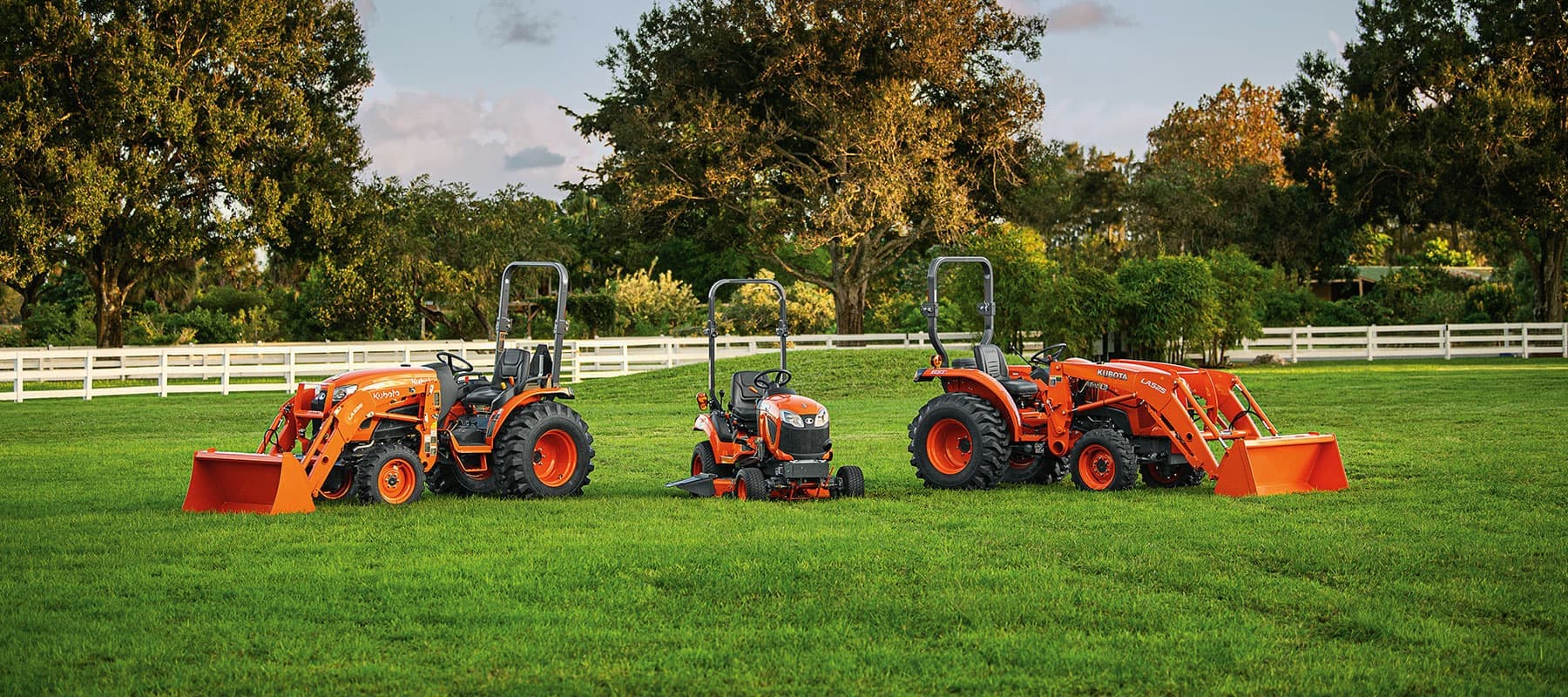
Pick 2
Kubota L2501
Compact
Compact baseline for buyers whose weekly work already exceeds subcompact hitch comfort — a common step-up when the checklist includes heavier implements.
Verified specifications for Kubota L2501 Engine horsepower 24.8 HP Operating weight 2,623 lbs Rear hitch lift @ 24″ 1,389 lbs @ 24″ 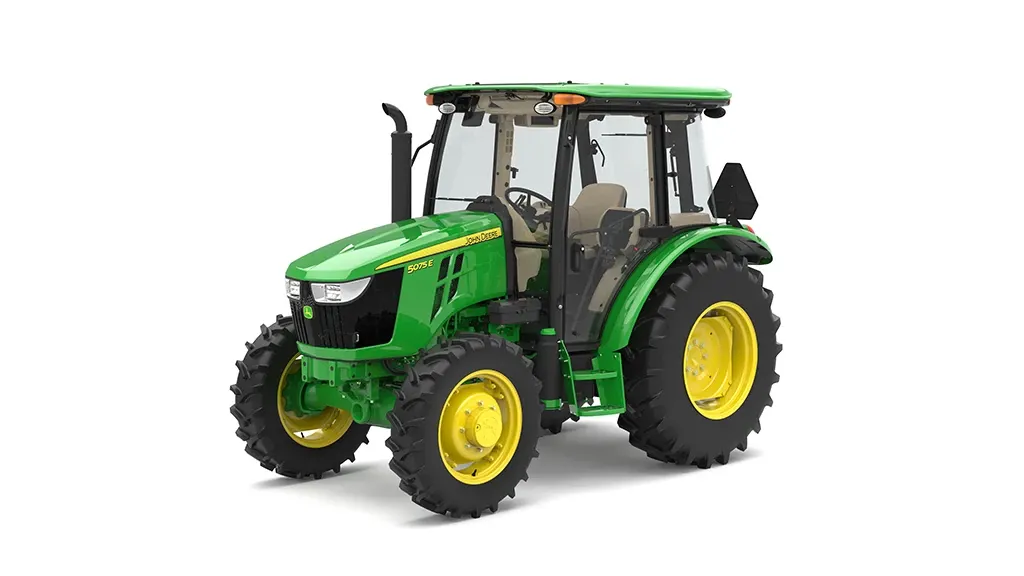
Pick 3
John Deere 5075E
Utility
Utility-class reference when hay, heavier loader cycles, or larger implements define the job — only step here if compact class cannot cover your regular tasks.
Verified specifications for John Deere 5075E Engine horsepower 71 HP Operating weight 5,445 lbs Rear hitch lift @ 24″ 3,192 lbs @ 24″
Start with the job, not the brand
How to choose a farm tractor begins with a written task list: mowing, snow, loader work, tillage, fencing, hay, or brush. Rank tasks by how often you do them. The machine should fit your weekly work. Occasional heavy jobs can be hired out or shared — buying for a once-a-year nightmare day is how owners end up with an oversized tractor they cannot turn around.
Size class in plain language
Sub-compact suits tight spaces and light chores. Compact is the sweet spot for many five- to twenty-acre properties with mixed implements. Utility class fits heavier farm work and larger hitch loads. Use our acreage guides and size-class diagram to sanity-check where you sit before you fall in love with a showroom model.
Implements decide the tractor
Rear PTO, hitch category, and lift capacity must match the cutter, tiller, blade, or baler you plan to run. Loader lift is separate from rear hitch lift — both matter if you stack snow or move materials. Never buy horsepower alone; buy the hitch and PTO package that fits the implement list.
Buying checklist before you sign
Confirm local dealer parts and service. Walk the tractor through your gates and into storage. Test turning radius with the loader attached. Ask for ballast recommendations with the loader package. Compare verified OEM specs on our profiles — not brochure adjectives. Get a written quote that includes the attachments you need on day one.
New vs used when choosing a tractor
New machines bring warranty and known hours; used machines can stretch budget if inspection and service history are solid. Either way, the size-class decision stays the same. See our new vs used buying guide once you know which class fits your property.
When to use the AI Advisor
If you are still unsure after the checklist, run our guided Advisor — it ranks published catalog models from your answers without inventing specs. Use it as a shortlist tool, then verify every pick against the OEM-sourced fact tables on the profile pages.
FAQ
- What size tractor do I need?
- Size follows tasks and acreage, not a single number. Light one- to five-acre chores often fit sub-compact; mixed five- to twenty-acre work often fits compact; heavier farm implements push toward utility. Use our acreage-specific guides for a narrower answer.
- Should I buy John Deere or Kubota?
- Choose the brand with strong local dealer support for the class you need. Specs and implement fit matter more than brand loyalty — see our John Deere vs Kubota compact comparison for a neutral side-by-side.
- What tractor should I buy as a first machine?
- Most first-time buyers on small acreage do best with a sub-compact or compact loader package and a clear implement list. Avoid utility class until weekly tasks demand it. Our first-time buyer guide walks through the same checklist in more detail.
- Do I need four-wheel drive?
- Yes for snow, soft ground, slopes, and loader work. Flat dry turf-only properties can sometimes use two-wheel drive — but four-wheel drive is the safer default for mixed acreage.