Best Tractor for Small Acreage (Buyer’s Guide)
By Roy Messiah · Last updated: 28 August 2026
Top pick tractors in this guide
The bottom line
For most small-acreage properties, a compact or sub-compact tractor in the right size class handles mowing, loader chores, and light implements better than stepping straight to utility class. Match the machine to your heaviest regular task — not your largest field — and prioritize rear PTO and hitch capacity for the implements you plan to run. Our picks cover the common all-rounder compact, a tight-property subcompact, and a value compact alternative.
Numeric specs in pick tables come from manufacturer pages in our verified database — not from AI-generated text.
Top picks
Pick 1
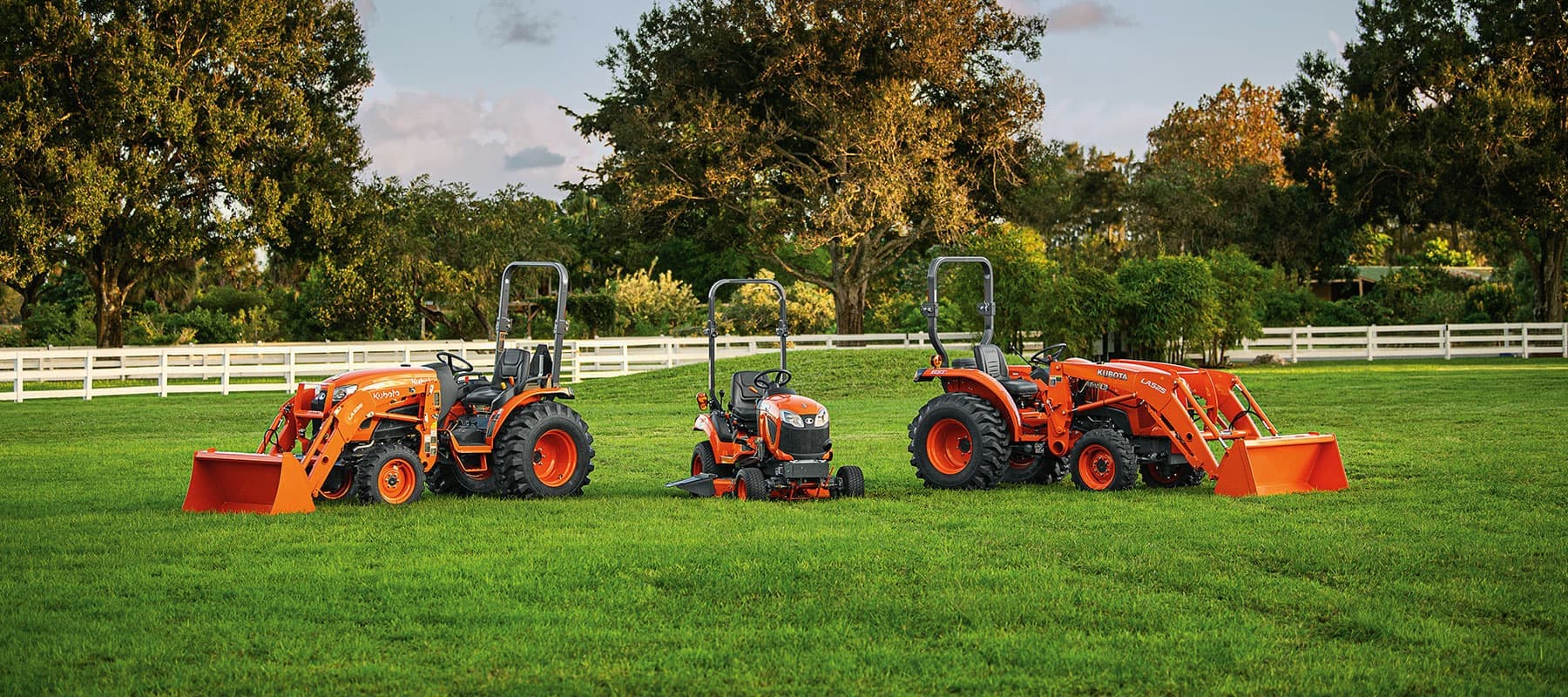
Kubota L2501
Compact
Our top all-rounder for mixed small-acreage chores — finish mowing, loader work, and a small utility implement when you need more capability than a lawn tractor without the size of a farm tractor.
Verified specifications for Kubota L2501 Engine horsepower 24.8 HP Operating weight 2,623 lbs Rear hitch lift @ 24″ 1,389 lbs @ 24″ 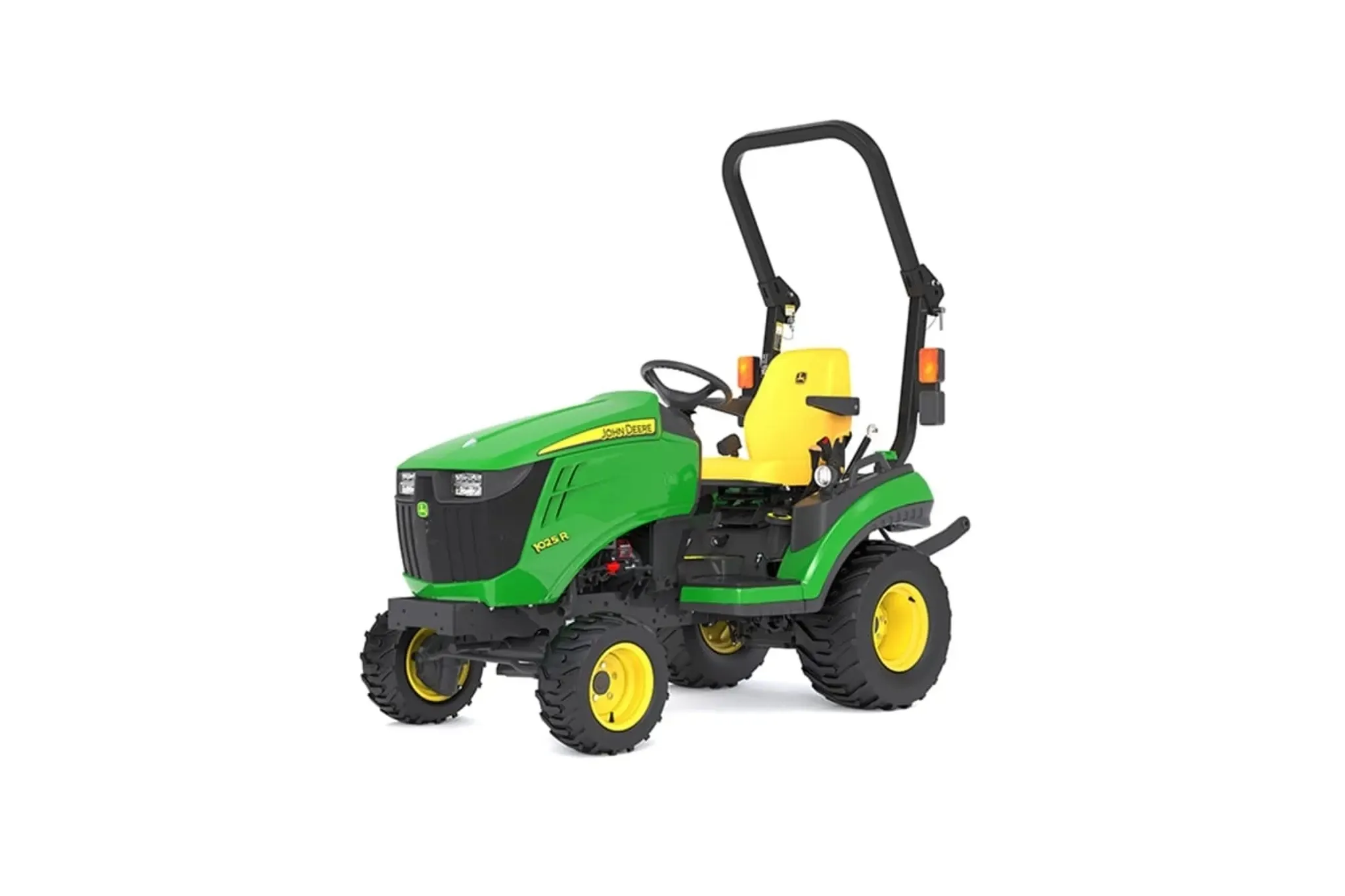
Pick 2
John Deere 1025R
Sub-Compact
Best when tight turns, limited storage, and turf-friendly sizing matter more than maximum implement capacity — ideal for landscaped acreage and driveway maintenance.
Verified specifications for John Deere 1025R Engine horsepower 23.9 HP Operating weight 1,556 lbs Rear hitch lift @ 24″ 758 lbs @ 24″ 
Pick 3
Kioti CK2620
Compact
Strong value pick with comparable compact capability for buyers who want loader flexibility and optional mid-mount mower capability (mid PTO is optional) without moving into utility class.
Verified specifications for Kioti CK2620 Engine horsepower 24.5 HP Operating weight 2,634 lbs Rear hitch lift @ 24″ 1,631 lbs @ 24″
How size classes compare
Tractor size classes (typical range)
Sub-Compact
1–5 acres
Loader and mower
Compact
5–20 acres
Bush hog and tiller
Utility
15+ acres
Hay and heavy implements
Illustrative: match class to property size and implement load, not horsepower alone.
How much tractor do you actually need?
Small acreage is not one job — it is a mix of mowing, driveway grading, snow, garden tillage, and occasional loader work. Most buyers oversize because they picture their worst day once a year. Start with the task you do every week: if that is finish mowing and light chores on mostly flat ground, sub-compact or compact class usually wins. If you regularly run a heavier rotary cutter, move bales, or grade gravel lanes, lean compact and verify rear hitch lift for your implement — not just engine size.
Sub-compact vs. compact on small acreage
Sub-compact tractors excel when storage space, maneuverability, and turf care dominate. Compact tractors add weight, stability, and hitch capacity for heavier implements and loader work on uneven ground. On mixed small-acreage chores, compact class is the most common sweet spot — but a well-equipped sub-compact still beats an oversized utility tractor you cannot turn around in the barn. See our sub-compact vs. compact comparison for a side-by-side decision framework.
Choose among our picks (A vs B when)
Choose the Kubota L2501 when you want a default compact for mixed mowing, loader work, and light implements with strong dealer packages. Choose the John Deere 1025R when gates, storage, and turf-friendly size matter more than compact hitch headroom — then stay in subcompact peers for Compare. Choose the Kioti CK2620 when value and loader flexibility matter and local Kioti support is solid. Cross-class shopping (1025R vs L2501) is a class decision first, not a same-peer Comp.
Stay, step up, or step down
Stay in the class that matches your weekly heaviest implement. Stay subcompact when turf and tight layout dominate. Stay compact when loader cycles, light grading, or moderate cutters are regular. Step up toward utility only when hay, heavier brush, or long field hours outgrow comfortable compact limits — and measure transport width and storage before you commit. Step down to a garden tractor only if you will never run real three-point implements.
What to verify before you buy
Rear PTO and three-point hitch category must match your implement list. Loader lift is separate from rear hitch lift — our spec tables show rear hitch capacity at the link arms only. Test the turning radius against your gates and barn doors. Finally, budget for attachments: a tractor without the mower, loader, or box blade you need is incomplete — dealer quotes vary by region and options, so size the machine to capability, not a price target.
Screen implements with Fit before you buy
Open the Attachment Fit checker for finish mower, rotary cutter, box blade, or snow blower on the tractor you are quoting. Fit checks hitch, PTO, and lift Facts — Partial means look up the missing OEM Fact (often PTO) for your serial year; we never invent ratings. That homework beats buying on brochure horsepower and discovering the cutter or blade does not clear.
Compare peers after you pick a class
If compact wins, Compare the L2501 to a same-class peer such as the 2032R on rear lift, weight, and verified hitch/PTO. If subcompact wins, Compare the 1025R to a BX-class peer the same way. Class first, peer Facts second, Fit for the implement third — that order is how small-acreage buyers avoid oversizing.
FAQ
- Is a sub-compact enough for small acreage?
- Often yes for mowing and light chores if terrain is manageable and you are not running heavy implements weekly. If the property includes steep slopes, rough fields, or regular brush cutting, compact class usually provides better stability and hitch capacity.
- Should I buy a tractor with a loader included?
- If driveway maintenance, moving mulch, or light material handling is part of your regular work, a loader package is worth prioritizing. Loader lift ratings are not the same as rear hitch lift — confirm both against your tasks.
- L2501 or 1025R for small acreage?
- That is usually a class choice first. L2501 sits in compact for mixed chores and hitch headroom; 1025R sits in subcompact for tight gates and turf. Pick the class from weekly work, then Compare peers inside that class.
- Do I need four-wheel drive on small acreage?
- Four-wheel drive helps on hills, wet ground, and snow. On flat, dry turf it is optional. Match drive type to your worst regular conditions, not a single muddy week.
- How do I check if a mower or blade fits?
- Use the Attachment Fit checker with the implement type selected. Confirm serial-year OEM sheets; Partial means a Fact is missing — usually PTO.