What Is a Three Point Hitch? (Beginner Guide)
By Roy Messiah · Last updated: 19 July 2026
Top pick tractors in this guide
The bottom line
A three point hitch is the triangular linkage at the rear of a tractor that lifts and holds implements: two lower arms plus a top link. Hitch categories (Cat 0, Limited Cat I, Cat I, Cat II) set pin size, spacing, and design load. Match the implement’s hitch list to your tractor’s OEM category, then confirm PTO power and rear lift — hitch geometry alone is not a full fit check.
Numeric specs in pick tables come from manufacturer pages in our verified database — not from AI-generated text.
How size classes compare
Tractor size classes (typical range)
Sub-Compact
1–5 acres
Loader and mower
Compact
5–20 acres
Bush hog and tiller
Utility
15+ acres
Hay and heavy implements
Illustrative: match class to property size and implement load, not horsepower alone.
Top picks
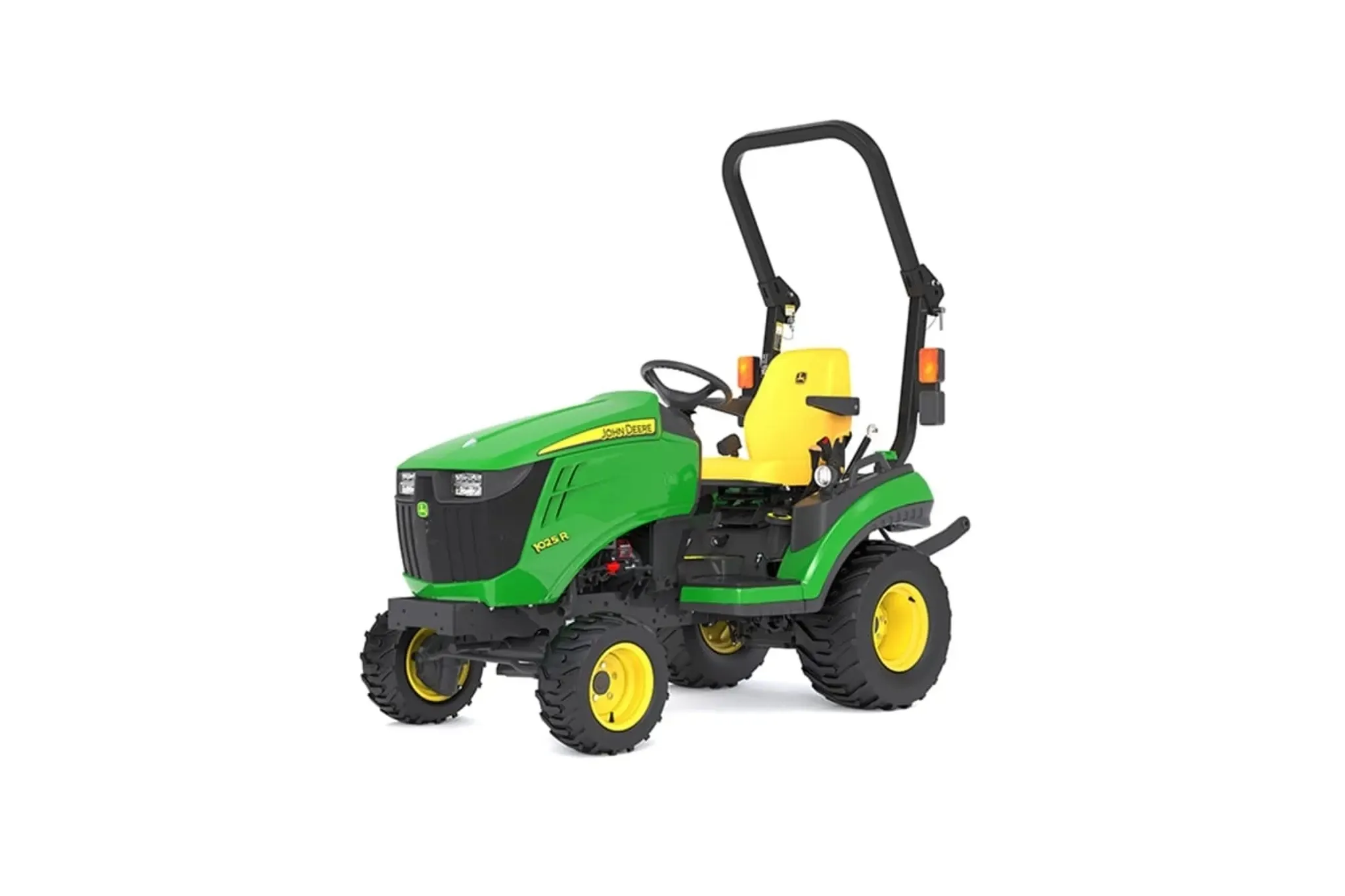
Pick 1
John Deere 1025R
Sub-Compact
Sub-compact reference when learning how Limited Category I hitch geometry limits heavier three-point tools.
Verified specifications for John Deere 1025R Engine horsepower 23.9 HP Operating weight 1,556 lbs Rear hitch lift @ 24″ 758 lbs @ 24″ 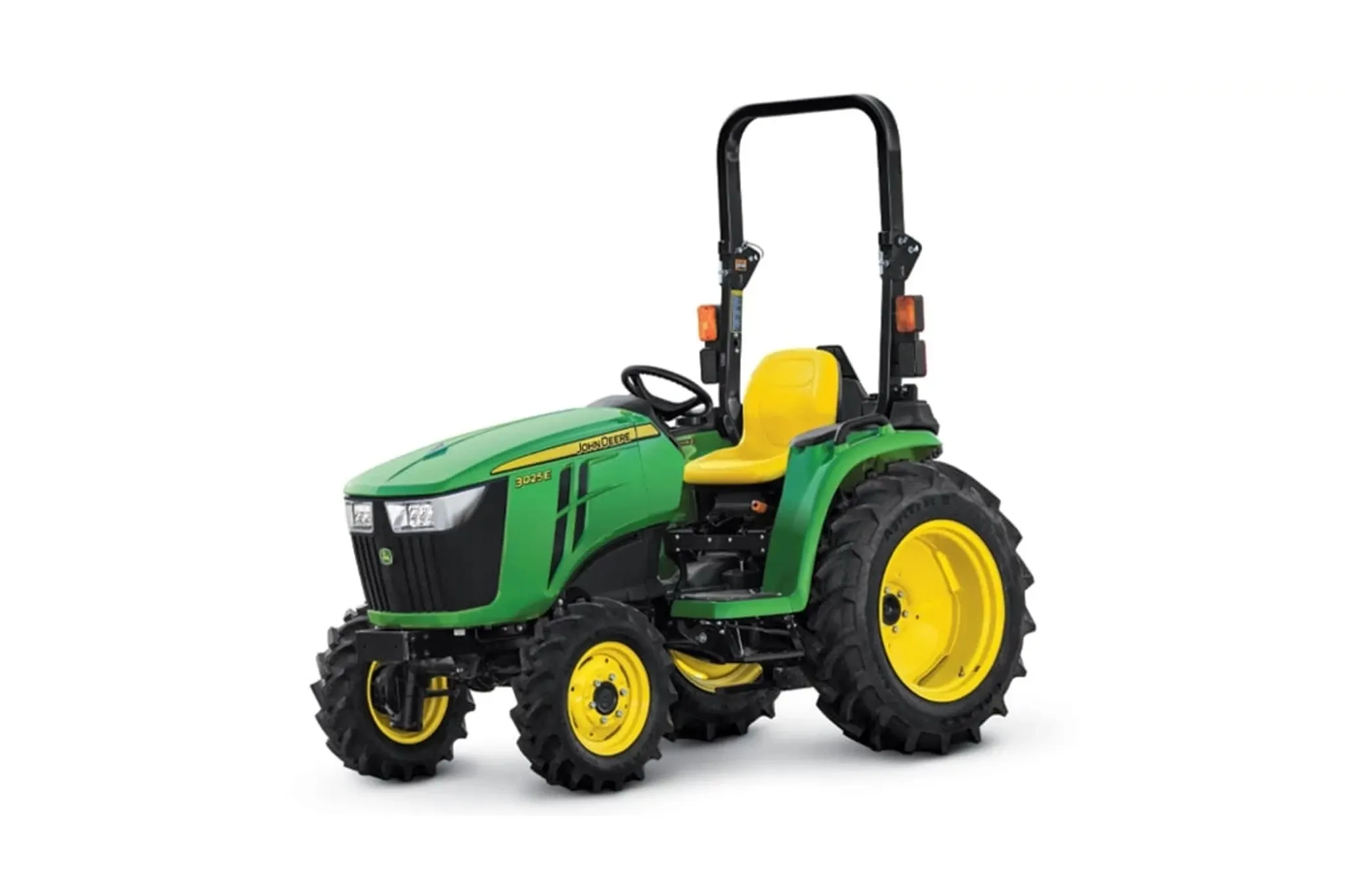
Pick 2
John Deere 3025E
Compact
Everyday Category I compact that shows how most property implements hang on a three point hitch.
Verified specifications for John Deere 3025E Engine horsepower 24.72 HP Operating weight 2,222 lbs Rear hitch lift @ 24″ 1,356 lbs @ 24″ 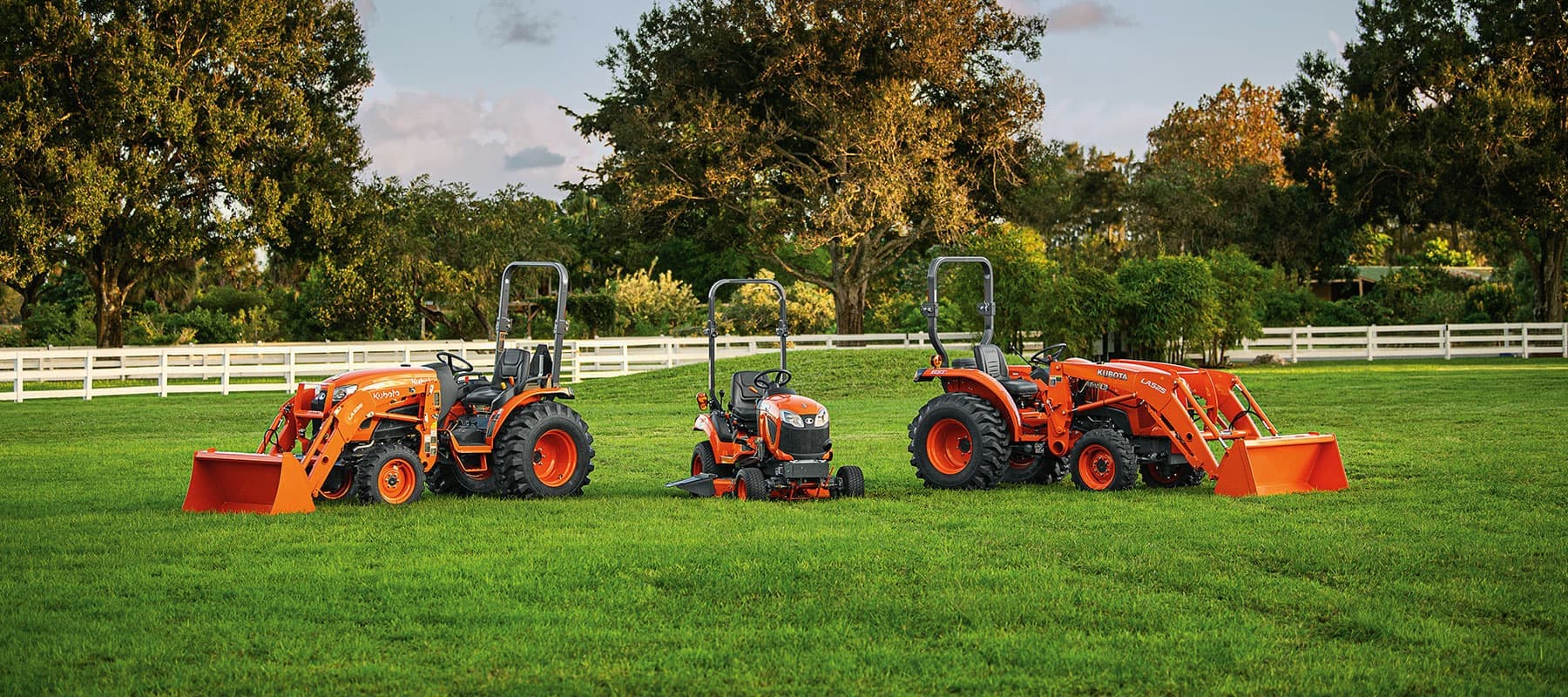
Pick 3
Kubota L2501
Compact
Common L-Series example for reading three-point lift ratings next to hitch category on the OEM sheet.
Verified specifications for Kubota L2501 Engine horsepower 24.8 HP Operating weight 2,623 lbs Rear hitch lift @ 24″ 1,389 lbs @ 24″
The three points, simply
Two lower draft arms carry most of the load and set the implement’s height and pitch; the top link stabilizes and fine-tunes fore-aft angle. Together they form a triangle that keeps a mounted tool tracking with the tractor. Drawn implements (wagons, some trailers) use a drawbar instead — different job, different attachment.
Why hitch category matters
ASAE categories standardize pin diameter and arm spacing so implements and tractors of the same class can couple. Category 1 (Cat 1 / Cat I) is the everyday compact class; Limited Category I is common on sub-compacts; Category II is heavier farm gear. See our hitch-categories overview and Category 1 deep dive for buying detail.
Lift, PTO, and ballast still rule
A hitch that pins correctly can still be unsafe if rear lift at twenty-four inches cannot carry the tool with headroom, or if PTO shaft power is short. Ballast and tire choice change how the three point behaves on grades. Use the Attachment Fit checker for a paper screen across hitch, PTO, and lift, then confirm serial-year OEM manuals.
Quick hitch vs standard three point
A quick hitch (iMatch-style or aftermarket) hangs on the three point and speeds hookup. It does not raise category, lift, or PTO ratings. Shop Cat 1 quick hitch hardware only after the tractor and implement already match on the OEM charts — then read our Cat 1 quick hitch guide for hardware caveats.
FAQ
- Is a three point hitch the same as a drawbar?
- No. The three point lifts and carries mounted tools; a drawbar pulls trailed equipment. Many tractors have both.
- What does Category 1 mean?
- Category 1 is the ASAE class used on most compact utility tractors. It defines pin size and spacing for common property implements — not a dealer package name.
- Can I run Category II tools on a Category 1 tractor?
- Pin adapters may change geometry, but they do not add lift or frame strength. If weight or PTO demand exceeds the tractor’s Facts, skip it.
- Where do I find my hitch type?
- On the manufacturer specification page or operator’s manual for your exact model year. Our Fit overlays list verified hitch categories for a growing set of popular models.