Best Tractor for a Small Hay Operation
By Roy Messiah · Last updated: 19 July 2026
Top pick tractors in this guide
The bottom line
Small hay operations usually need compact or utility class — adequate rear PTO for mower-conditioners or disc mowers, hitch capacity for wagons, and loader ability for bale handling. Match class to acres cut, bale type, and whether hay is a hobby side project or regular income workload.
Numeric specs in pick tables come from manufacturer pages in our verified database — not from AI-generated text.
Top picks
Pick 1
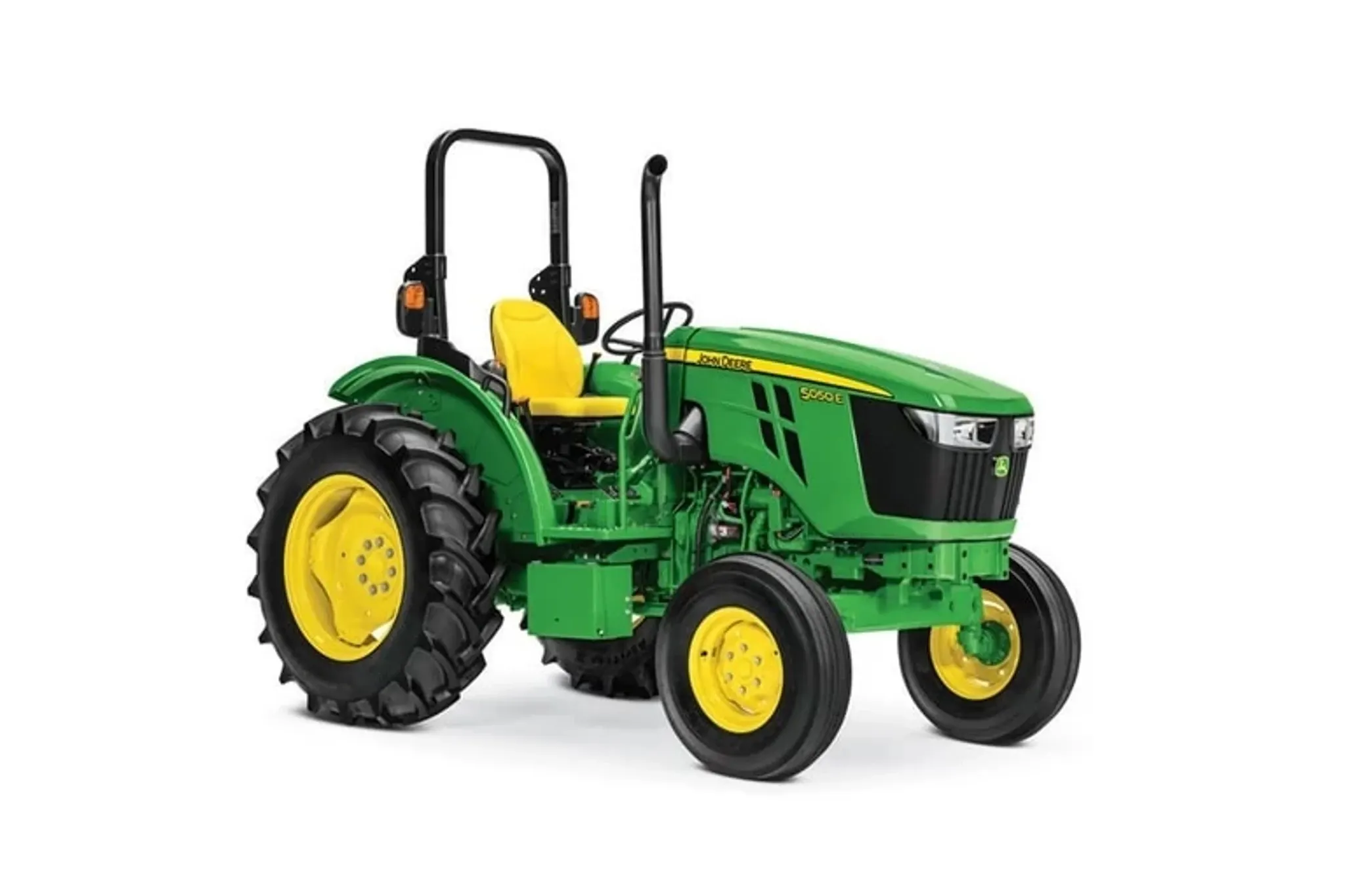
John Deere 5055E
Utility
Utility reference for small hayfields — PTO hours, hitch capacity, and frame mass suited to mower implements and wagon work beyond property-maintenance compacts.
Verified specifications for John Deere 5055E Engine horsepower 55 HP Operating weight 4,652 lbs Rear hitch lift @ 24″ 3,192 lbs @ 24″ 
Pick 2
Kubota MX5400
Utility
Utility-class alternative with hay-friendly PTO and stability for loader bale moves on smaller operations that still need real field hours.
Verified specifications for Kubota MX5400 Engine horsepower 55.5 HP Operating weight 3,734 lbs Rear hitch lift @ 24″ 2,310 lbs @ 24″ 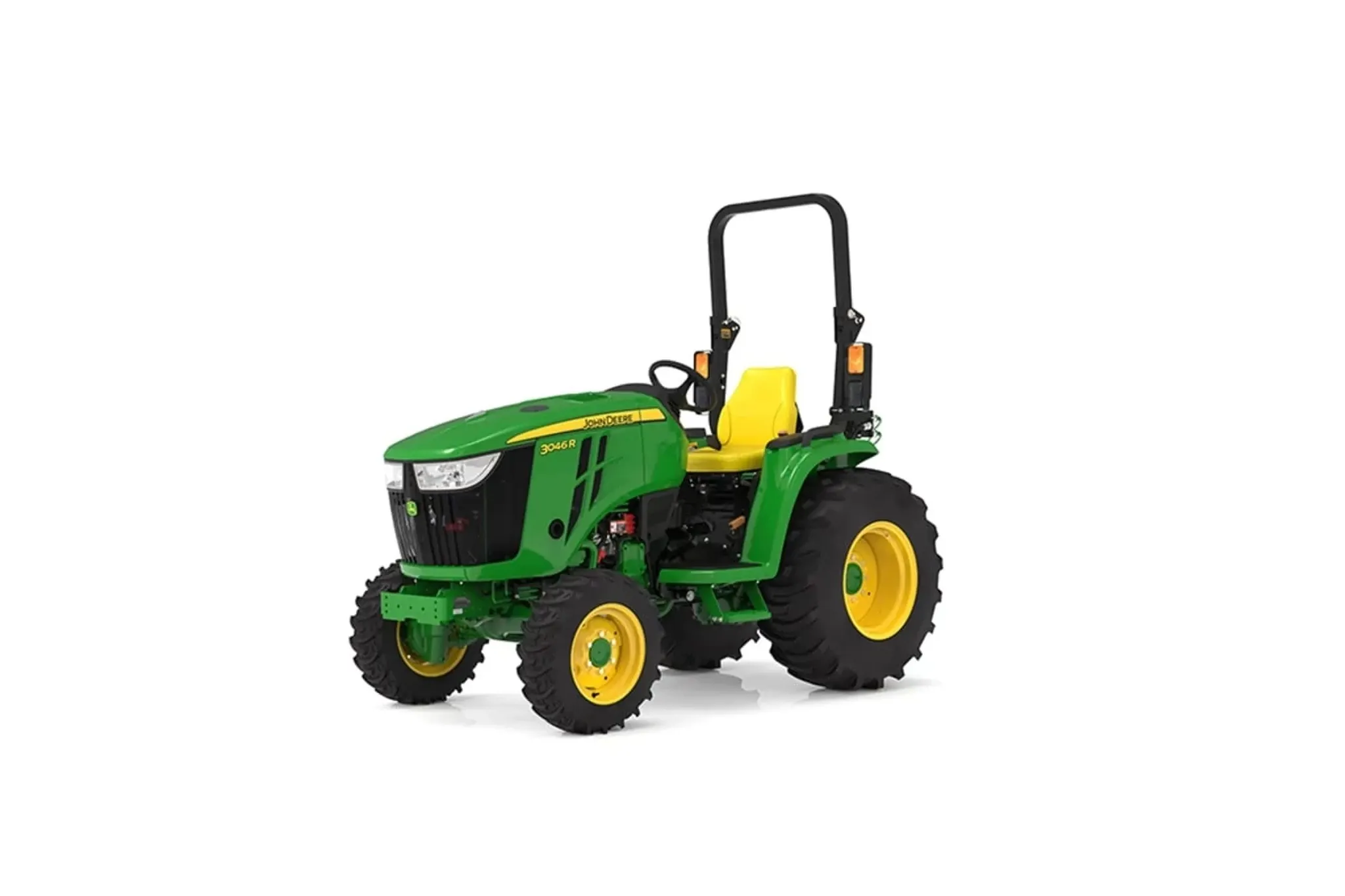
Pick 3
John Deere 3046R
Compact
Heavier compact when hay acres stay small but you want more capability than base compact without full utility transport width.
Verified specifications for John Deere 3046R Engine horsepower 44.7 HP Operating weight 3,066 lbs Rear hitch lift @ 24″ 2,194 lbs @ 24″
How size classes compare
Tractor size classes (typical range)
Sub-Compact
1–5 acres
Loader and mower
Compact
5–20 acres
Bush hog and tiller
Utility
15+ acres
Hay and heavy implements
Illustrative: match class to property size and implement load, not horsepower alone.
Hay is hours, not just acres
Small hay means tight cutting windows, PTO run time, and implement swaps — not just property size. Utility class enters when disc mowers, wagons, and long field days exceed comfortable compact PTO load. Hobby hay on a few acres may stay in heavy compact with careful implement sizing.
Bale handling and loader work
Square bales favor loader forks and moderate lift; round bales push hitch and loader requirements quickly. Loader ratings are separate from rear hitch lift — confirm both on OEM charts before committing.
Storage and transport reality
Utility tractors need barn clearance and road transport planning. Verify turning paths in tight barns before upsizing for hay alone — an oversized machine slows every chore outside the field.
Hay implements set the class
Small hay means mower, tedder/rake, and often a baler or spear. Those sheets usually want compact-utility or utility Facts — prove each in Fit.
Lift for spears and bales
Rear lift at 24 inches and ballast for spears are safety Facts/Claims from OEM charts. Do not size from engine HP alone.
FAQ
- Can a compact cut hay for sale?
- Possible on small acreage with properly sized mower implements and realistic hours. Commercial volume and larger implements usually push toward utility class.
- Do I need a cab for hay work?
- Open station works for short cuts; cabs help on long hot days and dusty conditions. Factor operator fatigue when hay is more than a weekend hobby.
- What about used hay equipment?
- Used mowers and wagons are common — match PTO speed and hitch category to your tractor first. Our implement-matching guide covers the pairing mindset.
- Can a compact bale small squares?
- Sometimes when the baler sheet and tractor PTO/lift clear. Round bales often need more mass — verify weights.