Best Tractor for a Livestock Farm
By Roy Messiah · Last updated: 19 July 2026
Top pick tractors in this guide
The bottom line
Livestock farms need reliable loader work for feed, bedding, and manure plus rear PTO for mowers and spreaders — usually compact or utility class depending on herd size and field acres. Prioritize loader packages, hitch capacity for wagons, and frame mass for daily chores in mud and slopes.
Numeric specs in pick tables come from manufacturer pages in our verified database — not from AI-generated text.
Top picks
- KubotaL4701
Pick 1
Kubota L4701
Compact
Heavier compact for daily loader cycles and spreader work on small livestock operations without jumping to full utility size.
Verified specifications for Kubota L4701 Engine horsepower 47.3 HP Operating weight 3,300 lbs Rear hitch lift @ 24″ 2,320 lbs @ 24″ 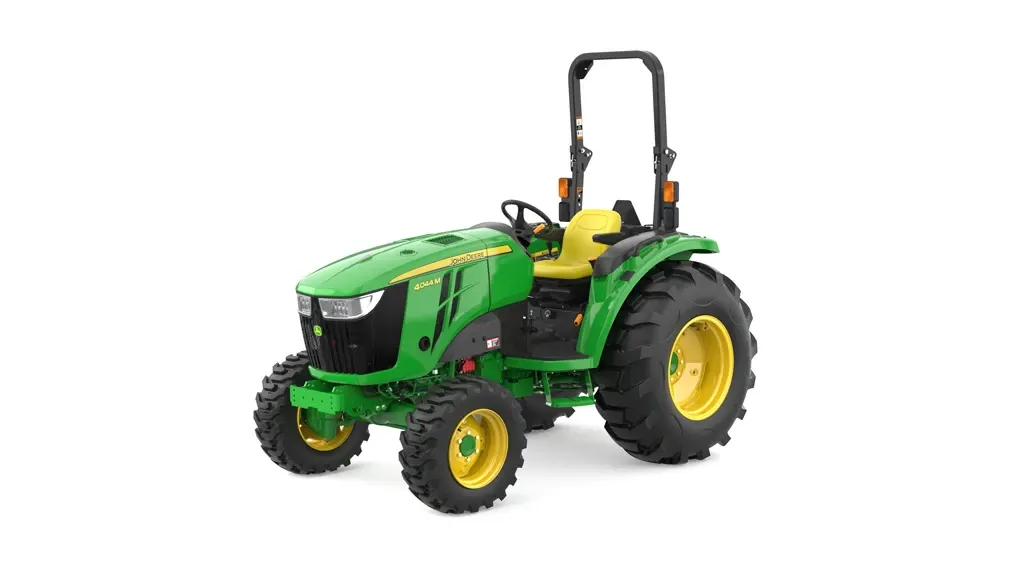
Pick 2
John Deere 4044M
Compact
Utility-leaning compact when hay, pasture, and barn chores combine and need more PTO hours than property-maintenance machines.
Verified specifications for John Deere 4044M Engine horsepower 43.1 HP Operating weight 3,770 lbs Rear hitch lift @ 24″ 2,500 lbs @ 24″ 
Pick 3
Kioti DK5520
Compact
Utility alternative for buyers who want hitch and loader headroom for wagons and field work on growing small farms.
Verified specifications for Kioti DK5520 Engine horsepower 55 HP Operating weight 3,373 lbs Rear hitch lift @ 24″ 2,716 lbs @ 24″
How size classes compare
Tractor size classes (typical range)
Sub-Compact
1–5 acres
Loader and mower
Compact
5–20 acres
Bush hog and tiller
Utility
15+ acres
Hay and heavy implements
Illustrative: match class to property size and implement load, not horsepower alone.
Daily loader chores dominate
Feed, bedding, manure, and water hauling repeat weekly — loader capability often matters more than maximum PTO. Compare loader lift charts on OEM pages separately from rear hitch ratings.
Pasture and manure spreading
Mowers and spreaders need rear PTO and stable hitch geometry. Match spreader size to tractor ratings; overloaded spreaders are hard on smaller frames in wet conditions.
Mud, slopes, and four-wheel drive
Livestock ground gets torn up fast. Four-wheel drive and sensible tire choice often matter as much as class choice — especially on hill pastures and winter feeding areas.
Loader duty cycles beat brochure HP
Livestock work is loader hours: feed, manure, bedding. Choose a frame with enough weight and a rear hitch that still clears your fence digger or blade after the loader is fitted.
Screen the dirty weekly jobs
List manure, fencing, and pasture mowing implements. Fit each on hitch, PTO, and lift. Utility frames help when round bales or heavier diggers enter the plan.
FAQ
- Is sub-compact enough for a few head of cattle?
- Possible for very small herds with light loader chores. Most livestock owners move to compact or utility once daily material handling scales up.
- Do I need a cab on a livestock farm?
- Open station works in mild climates; cabs help in winter feeding and long dusty days. Factor comfort for daily use, not demo-day weather.
- How does livestock differ from homestead chores?
- Livestock adds predictable daily loader hours and field work around pastures. Homesteads may stay lighter; livestock usually pushes hitch and loader requirements sooner.
- Do I need a cab for livestock work?
- Comfort and dust control are Claims based on your climate — not Facts we store. Spec Fit first, then decide cab vs ROPS with a dealer.