Best Tractor for Land Clearing
By Roy Messiah · Last updated: 19 July 2026
Top pick tractors in this guide
The bottom line
Land clearing needs matched rotary cutter or forestry mulcher capability, rear hitch capacity, and frame mass for stability — usually compact or utility class depending on vegetation density and slope. Size from implement requirements and terrain, not brochure adjectives; see our bush hog horsepower guide for PTO-first sizing.
Numeric specs in pick tables come from manufacturer pages in our verified database — not from AI-generated text.
Top picks
Pick 1
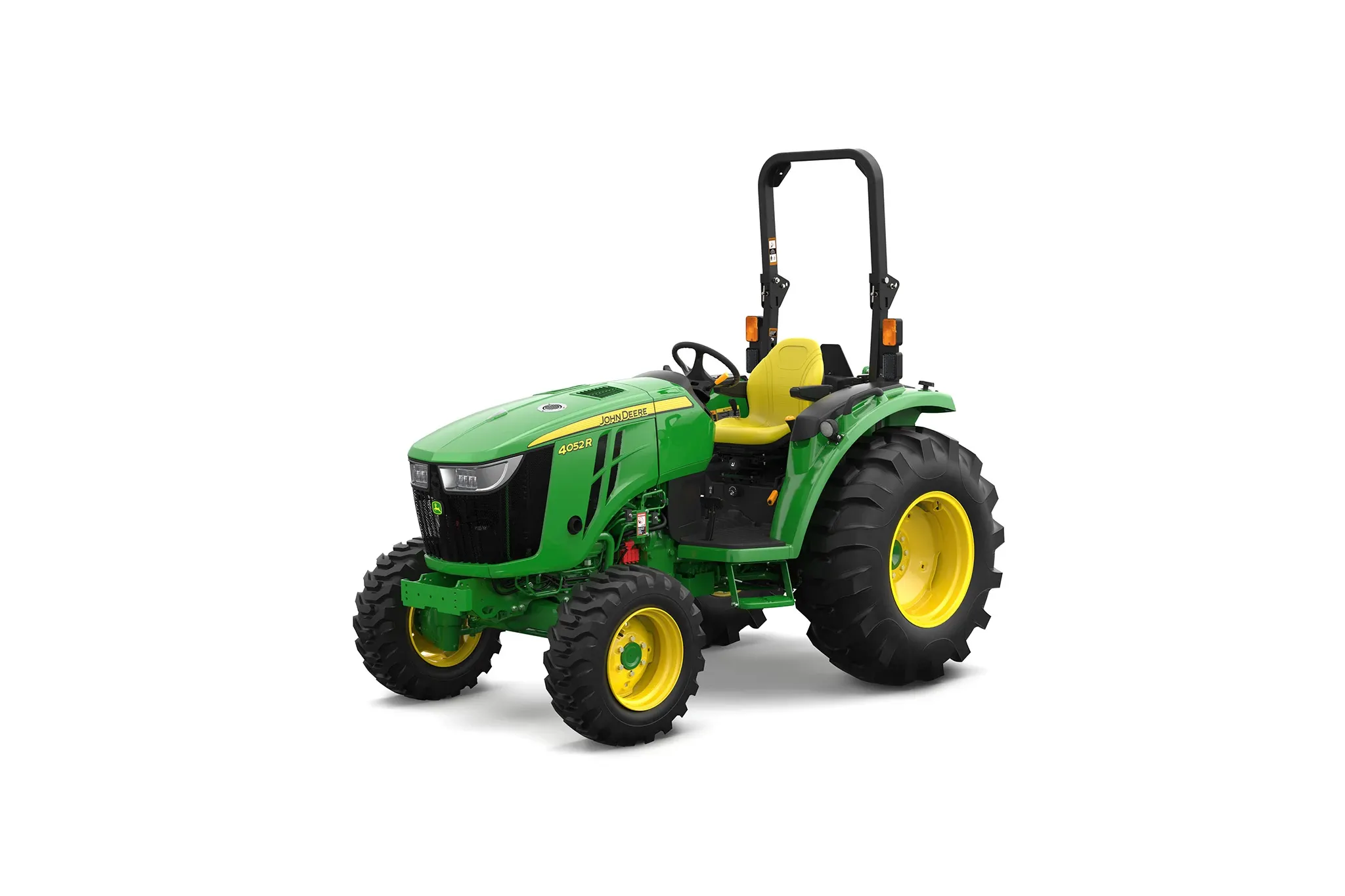
John Deere 4052R
Compact
Heavy compact for regular brush clearing and loader debris work — more frame mass and hitch headroom than base compacts on rough openings.
Verified specifications for John Deere 4052R Engine horsepower 50.8 HP Operating weight 3,770 lbs Rear hitch lift @ 24″ 2,500 lbs @ 24″ 
Pick 2
Kubota LX3520
Compact
Compact step-up with utility lean for mixed clearing and property maintenance when slopes and cutter loads demand stability.
Verified specifications for Kubota LX3520 Engine horsepower 34.9 HP Operating weight 2,191 lbs Rear hitch lift @ 24″ 1,962 lbs @ 24″ 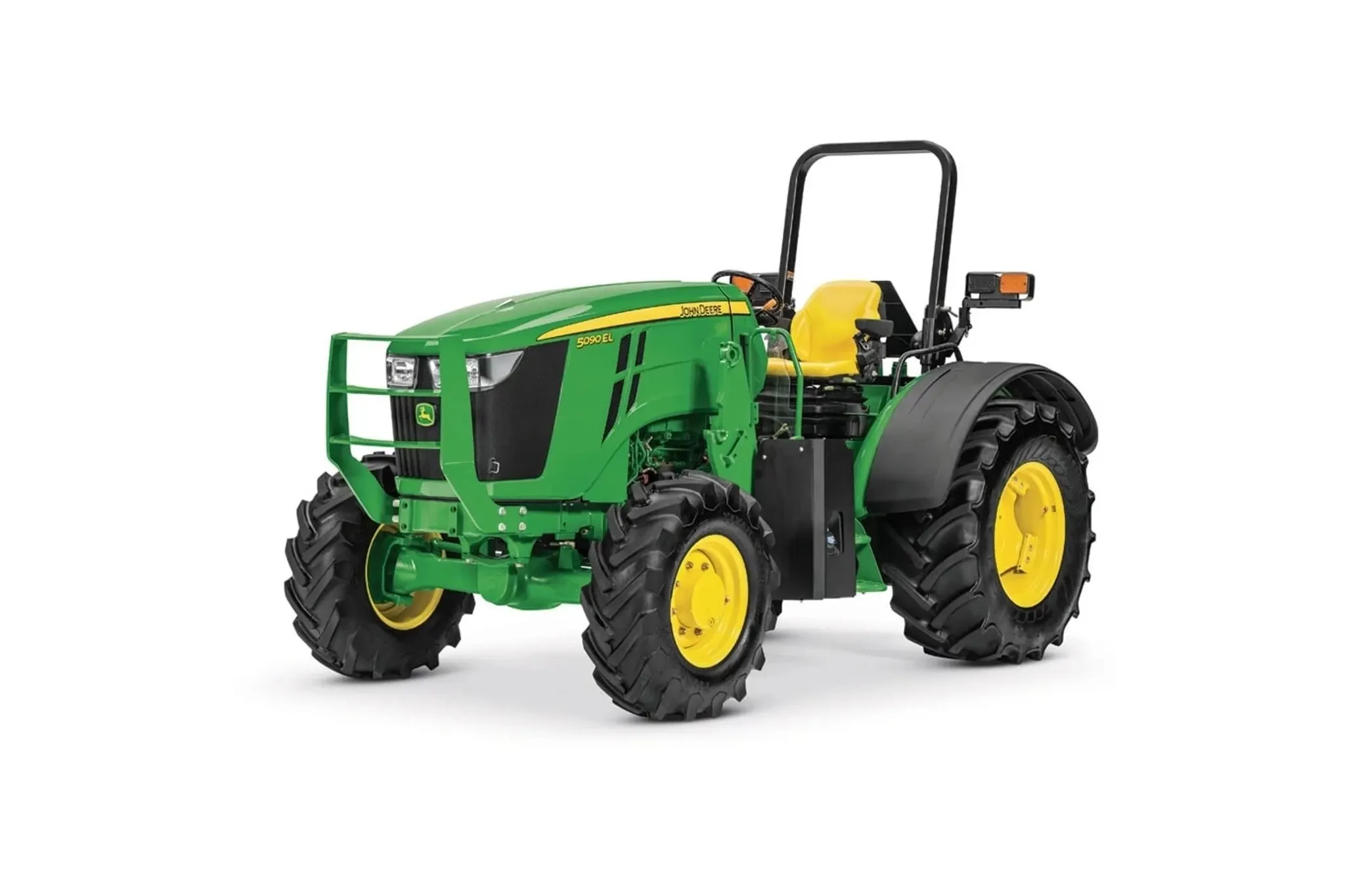
Pick 3
John Deere 5090E
Utility
Utility reference when clearing shifts to heavier brush, larger cutters, and longer field hours beyond comfortable compact limits.
Verified specifications for John Deere 5090E Engine horsepower 90 HP Operating weight 7,840 lbs Rear hitch lift @ 24″ 3,064 lbs @ 24″
How size classes compare
Tractor size classes (typical range)
Sub-Compact
1–5 acres
Loader and mower
Compact
5–20 acres
Bush hog and tiller
Utility
15+ acres
Hay and heavy implements
Illustrative: match class to property size and implement load, not horsepower alone.
Clearing severity sets the class
Annual light brush along a field edge differs from opening overgrown pasture or sapling thickets. Match cutter type and width to PTO and hitch ratings on OEM sheets. Undersized pairings are unsafe on slopes even if blades briefly turn.
Loader and grapple roles
After cutting, loaders and grapples move piles and logs. Clearing jobs often justify loader packages where mowing-only owners might skip them. Ballast and traction matter when combining rear implements with front loads.
Terrain and access
Steep or wet ground demands weight and four-wheel drive — not just more cutter width. Measure access lanes before buying utility width you cannot drive to the job site.
Cutter width vs PTO Fact
Land clearing with a rotary cutter fails first on PTO shaft power and lift, not engine marketing. Screen cutters in Fit; Partial means look up PTO — we never invent it.
Weight and ballast on brush
Heavier frames track better in brush. Ballast Claims belong on OEM charts; do not assume a light sub-compact is safe with a wide deck that barely clears lift on paper.
FAQ
- Can sub-compact clear land?
- Light brush on flat ground sometimes — with small cutters and strict PTO margin. Regular clearing or slopes usually need compact or utility class.
- Rotary cutter vs. forestry mulcher?
- Rotary cutters are common and affordable for field edges and pasture reopening. Mulchers handle standing brush and trees differently — match tractor hydraulics and frame to the implement class you choose.
- How does clearing differ from mowing pasture?
- Clearing loads PTO harder with thicker material and irregular stumps. Size with margin — infrequent heavy cuts are harder on tractors than maintained weekly mowing.
- Is a finish mower enough for clearing?
- No — finish mowers are turf tools. Brush needs a rotary cutter sized to PTO and hitch Facts.