Best Tractor for Snow Removal (Snow Tractor Buyer’s Guide)
By Roy Messiah · Last updated: 27 September 2026
Top pick tractors in this guide
The bottom line
Pick class first, then the attachment path. Choose a sub-compact—start with the John Deere 1025R and peer-compare the Kubota BX2380—for short, tight lanes when hitch and PTO Facts clear the attachment. Choose a compact—John Deere 2032R or Kubota L2501—when longer lanes and repeated pushing or stacking call for more frame mass. Then choose rear blade, snow blower, or loader/pusher from the table below, not from engine horsepower alone: engine horsepower is not PTO horsepower. Front-loader lift and price remain Partial until the exact OEM package sheet and dealer quote are checked.
Numeric specs in pick tables come from manufacturer pages in our verified database — not from AI-generated text.
Rear blade, snow blower, or loader/pusher?
| Path | Best when | Verify before buying (Facts / Fit) | Honest Partial |
|---|---|---|---|
| Rear blade (scrape / windrow) | Snow is manageable and an open shoulder can receive the windrow. | Hitch category · rear lift @ 24″ · blade width and weight · ballast | A rear-blade match does not prove snow-blower PTO Fit. |
| Snow blower (throw) | Drifts repeat, banks narrow the lane, or there is no stacking room. | Mount type (front / mid / rear) · hitch or OEM kit · PTO horsepower · PTO RPM · driveline | Front and mid kits are series-specific; check the OEM sheets and snow-blower Fit guide. |
| Loader / pusher (push / stack) | The lane is open, piles must be relocated, or the bucket also serves year-round chores. | Exact loader package sheet · ballast · axle limits | Loader lift is not rear hitch lift; never borrow the three-point row. |
Top picks
Pick 1
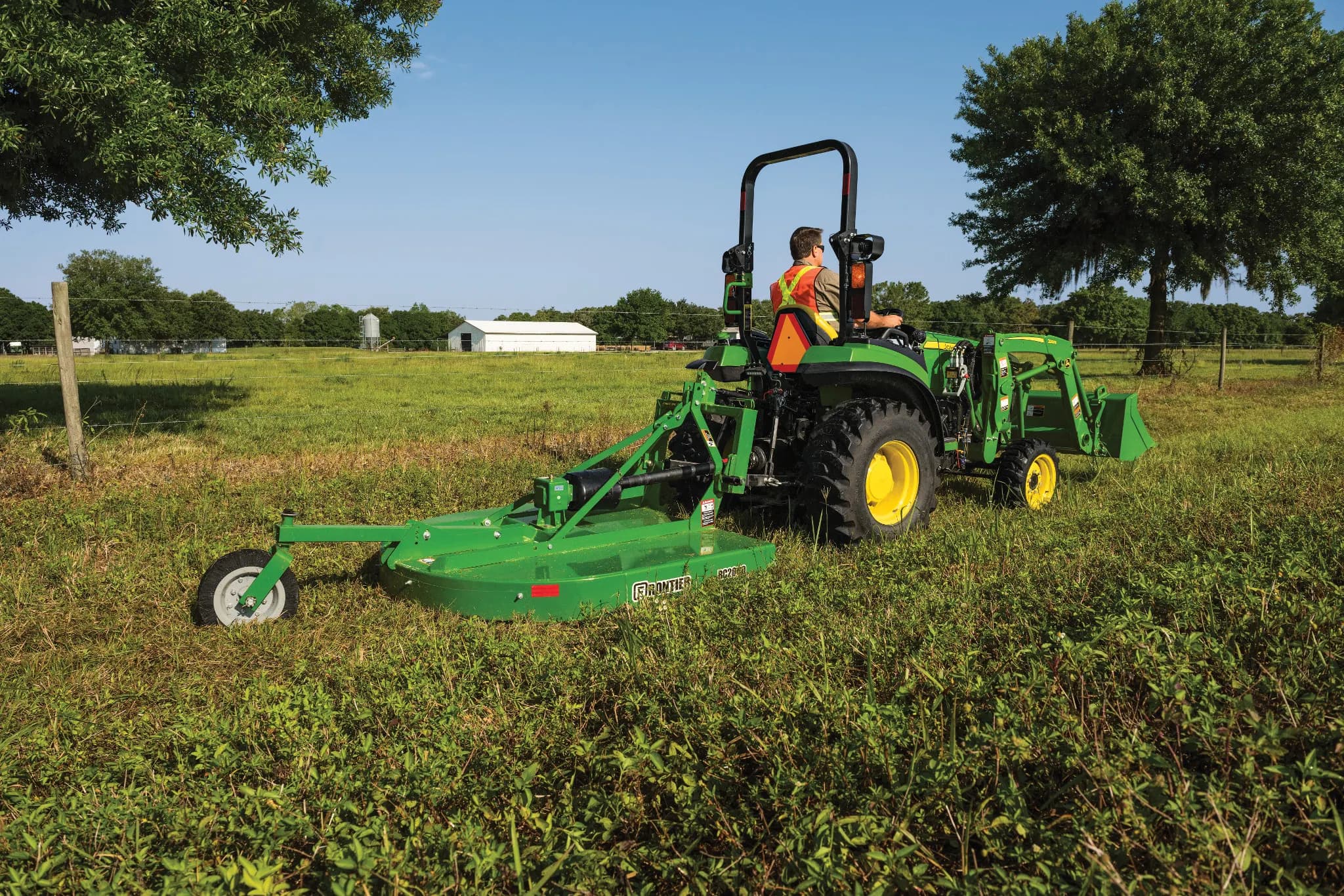
John Deere 2032R
Compact
Compact pick for longer lanes and repeated pushing where frame mass matters. Verify the exact loader package separately, or use the OEM hitch and PTO Facts below to screen a rear blade or blower.
Verified specifications for John Deere 2032R Engine horsepower 31.2 HP Operating weight 2,879 lbs Rear hitch lift @ 24″ 1,356 lbs @ 24″ Hitch category Category I PTO horsepower 23.9 PTO HP PTO RPM 540 RPM Front loader lift: Partial — look up the OEM sheet for the exact loader package.
Pick 2
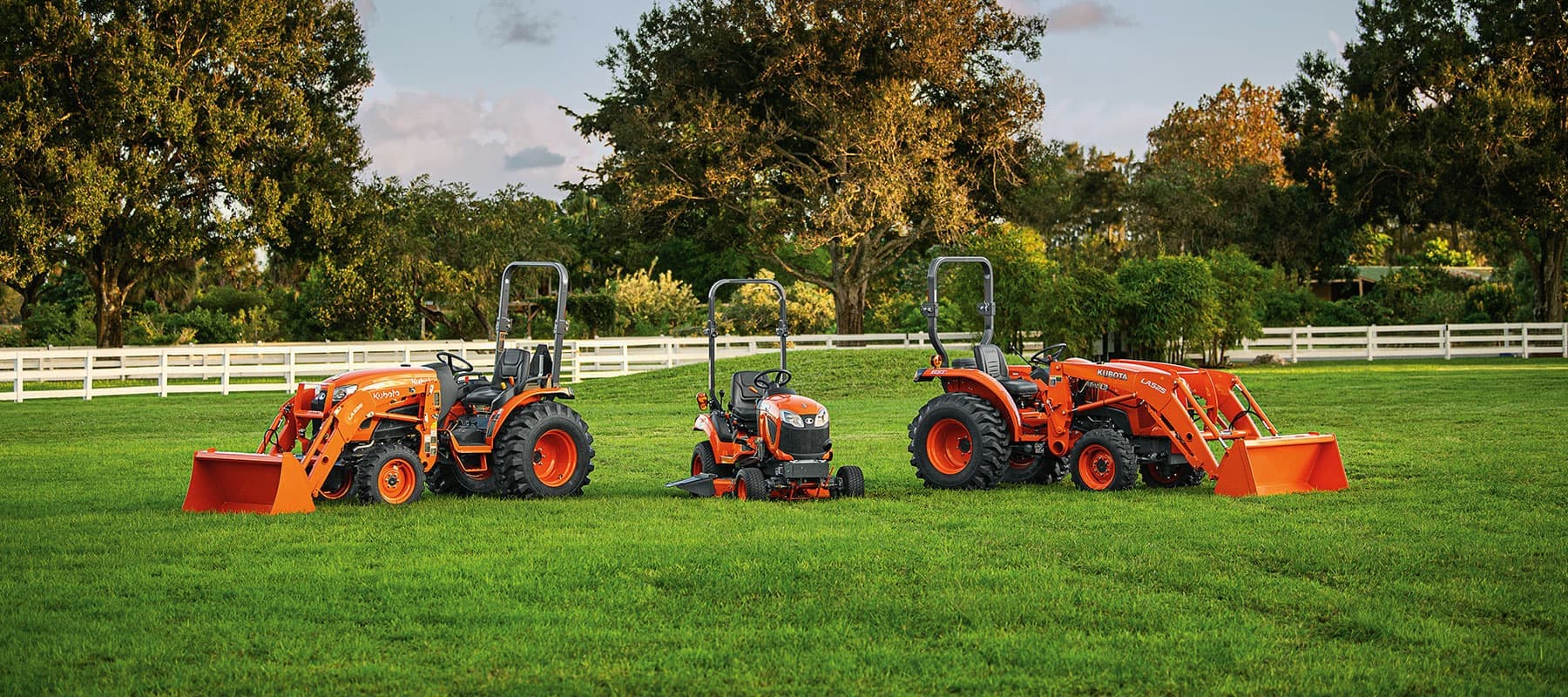
Kubota L2501
Compact
Compact peer for buyers comparing a simple snow setup with local Kubota support. Treat loader lift as Partial until the quoted loader model is checked on its OEM sheet.
Verified specifications for Kubota L2501 Engine horsepower 24.8 HP Operating weight 2,623 lbs Rear hitch lift @ 24″ 1,389 lbs @ 24″ Hitch category Category I PTO horsepower 19 PTO HP PTO RPM 540 RPM Front loader lift: Partial — look up the OEM sheet for the exact loader package.
Pick 3
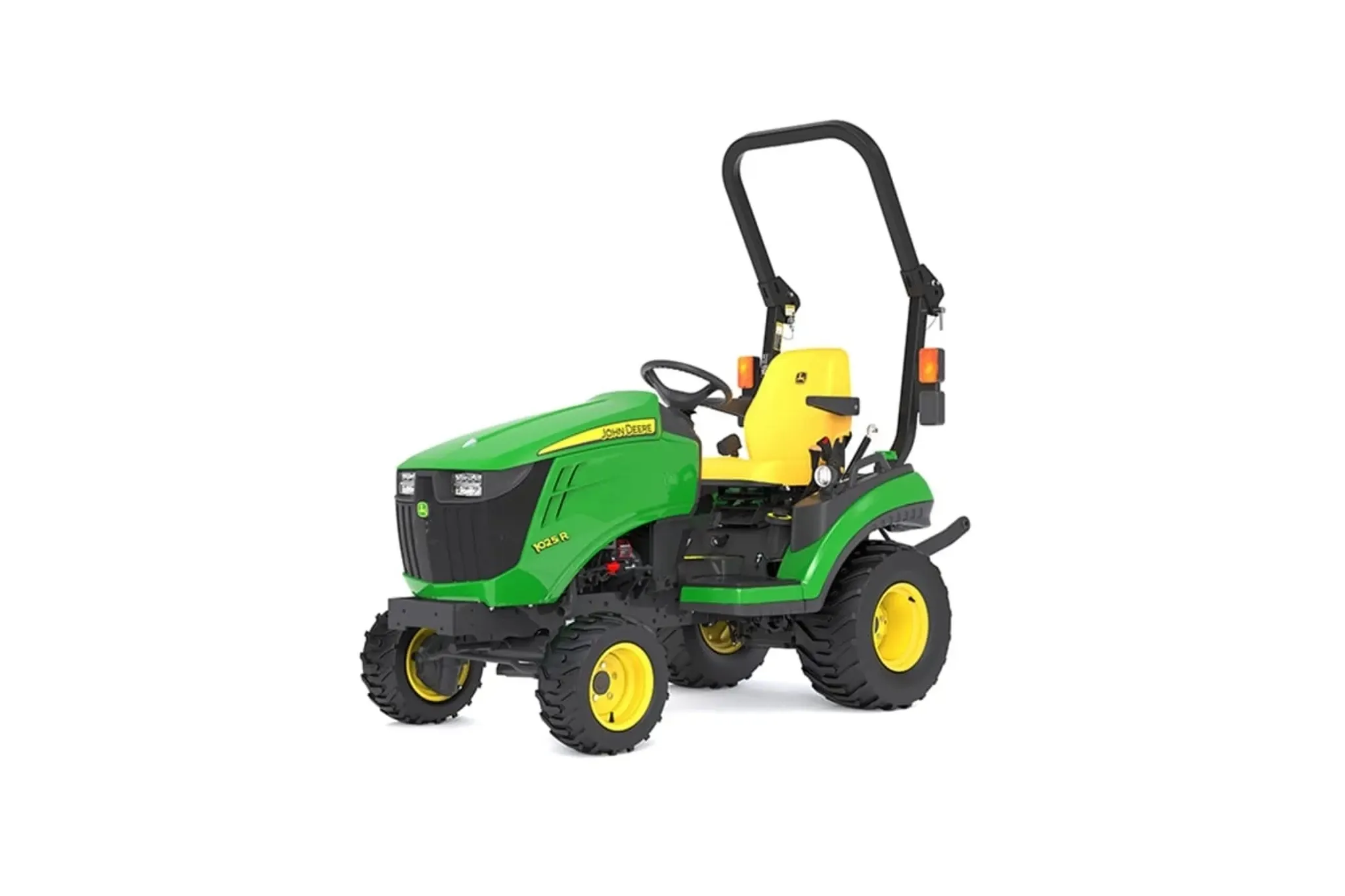
John Deere 1025R
Sub-Compact
Sub-compact pick for tighter storage, paths, and shorter lanes. Use its verified hitch and PTO Facts for attachment screening, then look up the exact loader or front-blower package.
Verified specifications for John Deere 1025R Engine horsepower 23.9 HP Operating weight 1,556 lbs Rear hitch lift @ 24″ 758 lbs @ 24″ Hitch category Limited Category I PTO horsepower 17.2 PTO HP PTO RPM 540 RPM Front loader lift: Partial — look up the OEM sheet for the exact loader package.
How size classes compare
Tractor size classes (typical range)
Sub-Compact
1–5 acres
Loader and mower
Compact
5–20 acres
Bush hog and tiller
Utility
15+ acres
Hay and heavy implements
Illustrative: match class to property size and implement load, not horsepower alone.
Start with the snow job, not the tractor badge
Map the lane before comparing machines: note grades, tight turns, parked vehicles, garage clearance, prevailing drifts, and where snow can remain all winter. A short open drive may need scraping and occasional stacking; a narrow lane with growing banks may need snow thrown clear. Choose the attachment path first, then the tractor class and peer comparison. Engine horsepower alone does not answer traction, attachment Fit, or storage questions.
Blade vs blower vs loader
Choose a rear blade when the main job is scraping manageable snow and windrowing it to an open edge; confirm hitch category, rear lift, blade width, and ballast. Choose a blower when drifts, narrow shoulders, or bank growth make throwing snow more useful than pushing it; confirm mount or hitch, PTO horsepower, and PTO RPM. Choose a loader when piles must be pushed back or stacked and the bucket also serves year-round chores. None is automatically best. A loader lift claim is not interchangeable with rear-hitch lift, and a rear-blade setup does not prove blower PTO Fit.
Choose your next check
Check blower Fit, compare within the class you chose, or use Advisor for ranked picks from the verified catalog.
Read the OEM Fact table on every pick
Each pick card separates verified Facts from buying guidance. Hitch category, PTO horsepower, and PTO RPM come from the tractor-fit OEM overlay, alongside database engine power, operating weight, and rear three-point lift. These Facts screen rear blades and PTO-driven blowers; they do not establish front attachment compatibility. Partial means stop and look up the missing package or serial-year sheet.
Loader path: push and stack, then verify the package
A bucket is versatile for opening a lane, relocating piles, and reclaiming space after repeated storms. It can also be slower than a dedicated blade on long runs and can leave banks that harden over winter. Front-loader lift is Partial in this guide because capacity changes with the exact loader, bucket, pin location, and measurement method. Ask for the OEM sheet matching the quoted loader package and confirm the manufacturer ballast instructions. Never use the rear-hitch lift row as loader capacity.
Rear blade path: scrape and windrow
A rear blade is the simpler non-powered path when there is room to roll snow off the drive. Match the blade's hitch category and required lift to the tractor, and confirm that its width and weight suit the machine. Angling a blade can pull the tractor sideways on packed snow, so traction, ballast, and conservative travel speed still matter. For gravel, leave a base until the surface is frozen rather than digging in with an aggressive edge.
Blower path: throw snow and protect lane width
A blower is useful where banks close in, drifting repeats, or there is no practical stacking area. Rear blowers usually depend on three-point hitch compatibility plus verified PTO shaft power and RPM; front or mid-mount systems need model-specific mounts and driveline parts. Open Fit with snow blower selected before choosing a machine. If any required Fact is Partial, use the OEM tractor and blower sheets for the exact model year instead of assuming engine horsepower reaches the PTO.
Sub-compact vs compact: pick the class first
A sub-compact can suit tighter spaces and shorter lanes when the matched attachment, traction plan, and ballast are adequate. A compact offers more frame mass for longer runs and repeated pushing but also needs more storage and turning room. Decide from the regular winter job, not a rare worst-case storm. Then compare within class: 1025R vs BX2380 in Sub-Compact, or 2032R vs L2501 in Compact.
Traction, ballast, visibility, and control
Four-wheel drive helps but does not replace tire grip, chains where permitted, correct ballast, or cautious operation. Follow the tractor and attachment manuals for ballast and axle limits, especially with a raised loader. Plan lighting for dark storms, keep discharge away from people and roads, and verify sight lines around the bucket or blower. A cab can improve comfort but changes height, visibility, and the dealer quote, so measure storage before ordering.
Use Fit, Compare, and Advisor in that order
Use Fit to screen the blower or rear implement against hitch, PTO, and lift Facts. Use Compare only after choosing a size class: the pick-card links lead to the indexed 2032R vs L2501 and 1025R vs BX2380 peer pages. Use Advisor when you want ranked candidates from the verified catalog based on terrain, budget, and chores. Return to the OEM package sheet for every Partial before buying.
Quote checklist: attachment, ballast, controls, and price
Ask the dealer to identify the exact tractor variant, loader or blower model, mounting kit, bucket or cutting edge, ballast package, tire setup, chains if applicable, hydraulic controls, lighting, and warranty coverage on one written quote. This guide does not publish MSRP because packages, regions, and model years vary. Compare like-for-like installed packages and keep unresolved loader lift or mount compatibility marked Partial until the matching OEM documentation is in hand.
FAQ
- Blade, blower, or loader/pusher—which should I choose first?
- Choose a rear blade to scrape and windrow when shoulders are open, a snow blower to throw snow when drifts or growing banks are the constraint, or a loader/pusher to push, relocate, and stack piles. Then use Fit and the exact attachment sheet; one matched path does not prove another.
- Does engine horsepower determine snow-blower width?
- No. Engine horsepower is not PTO horsepower, and Machinery Intel does not publish a horsepower-per-inch rule. Screen with verified OEM PTO horsepower and PTO RPM, then confirm the mount, hitch or kit, driveline, and exact blower requirements in the snow-blower Fit guide and OEM sheets.
- Sub-compact or compact for my driveway?
- For short, tight lanes, start with the John Deere 1025R sub-compact class and compare the Kubota BX2380 peer after the attachment clears Fit. For longer lanes and repeated pushing or stacking, compare the John Deere 2032R and Kubota L2501 compact picks. Choose for the regular winter job, not a rare storm.
- Is loader lift the same as rear hitch lift?
- No. The rear hitch lift Fact belongs to the three-point hitch and must not be reused as front-loader capacity. Loader lift remains Partial here until the exact loader, bucket, measurement point, and OEM package sheet are checked.
- How do I check if a snow blower fits?
- Open the snow-blower Fit guide, then use the Attachment Fit checker with snow blower selected. Confirm the mount type, hitch or model-specific kit, verified PTO horsepower, PTO RPM, lift, and driveline on matching OEM sheets. Partial means look it up, not Compatible.
Next steps for snow buyers
- Check snow blower Fit for your tractor →
- Does a snow blower fit my tractor? →
- Browse curated snow blower classes →
- John Deere 2032R specs & Fit →
- Kubota L2501 specs & Fit →
- John Deere 1025R specs & Fit →
- Kubota BX2380 specs & Fit →
- Compare John Deere 2032R vs Kubota L2501 (compact peers) →
- Compare John Deere 1025R vs Kubota BX2380 (sub-compact peers) →
- Do you need a front-end loader? →
- How we separate Facts from Claims →