Do You Need a Front-End Loader on Your Tractor?
By Roy Messiah · Last updated: 19 July 2026
Top pick tractors in this guide
The bottom line
Buy a loader if you regularly move gravel, mulch, snow, feed, or soil — not if you only mow turf. A front-end loader is the most-used attachment on many acreage properties, but it adds cost, weight, and visibility tradeoffs. Match loader capacity to your materials and terrain, separate from rear hitch ratings.
Numeric specs in pick tables come from manufacturer pages in our verified database — not from AI-generated text.
Top picks
Pick 1
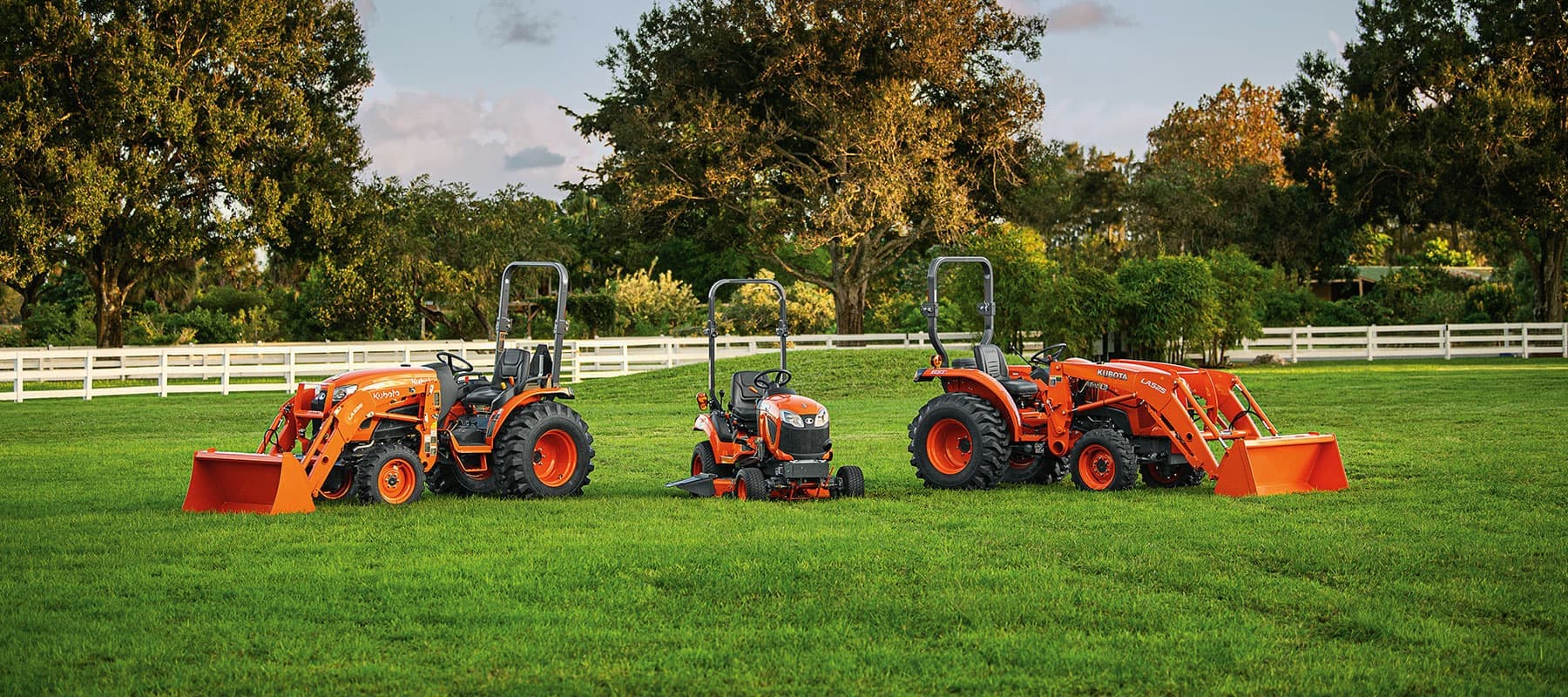
Kubota L2501
Compact
Representative compact often sold with loader packages — good reference for pairing tractor class with everyday material-handling chores.
Verified specifications for Kubota L2501 Engine horsepower 24.8 HP Operating weight 2,623 lbs Rear hitch lift @ 24″ 1,389 lbs @ 24″ 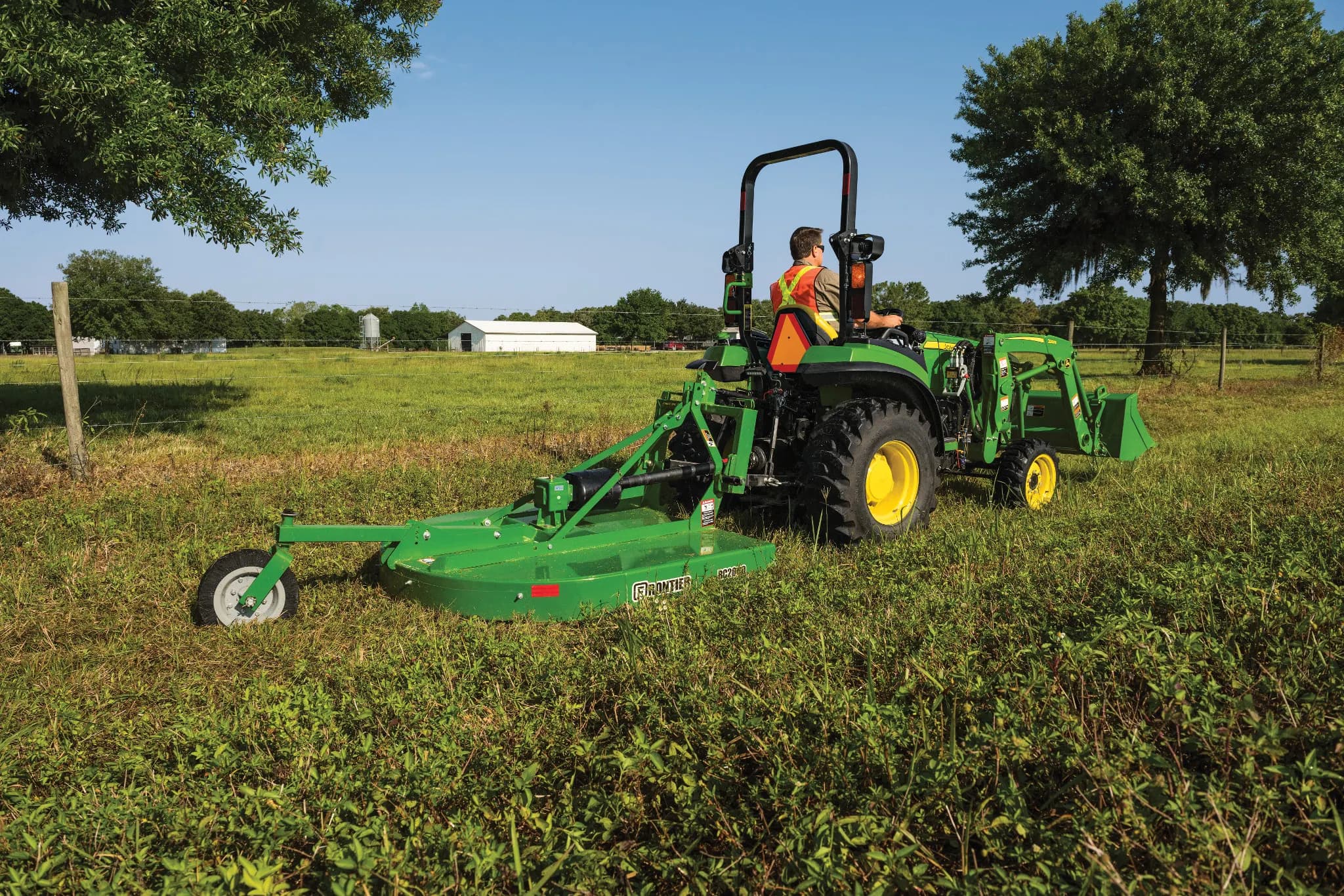
Pick 2
John Deere 2032R
Compact
Heavier compact frame for owners who loader more often or handle rougher driveway and lane work — compare loader lift charts on the OEM sheet.
Verified specifications for John Deere 2032R Engine horsepower 31.2 HP Operating weight 2,879 lbs Rear hitch lift @ 24″ 1,356 lbs @ 24″ 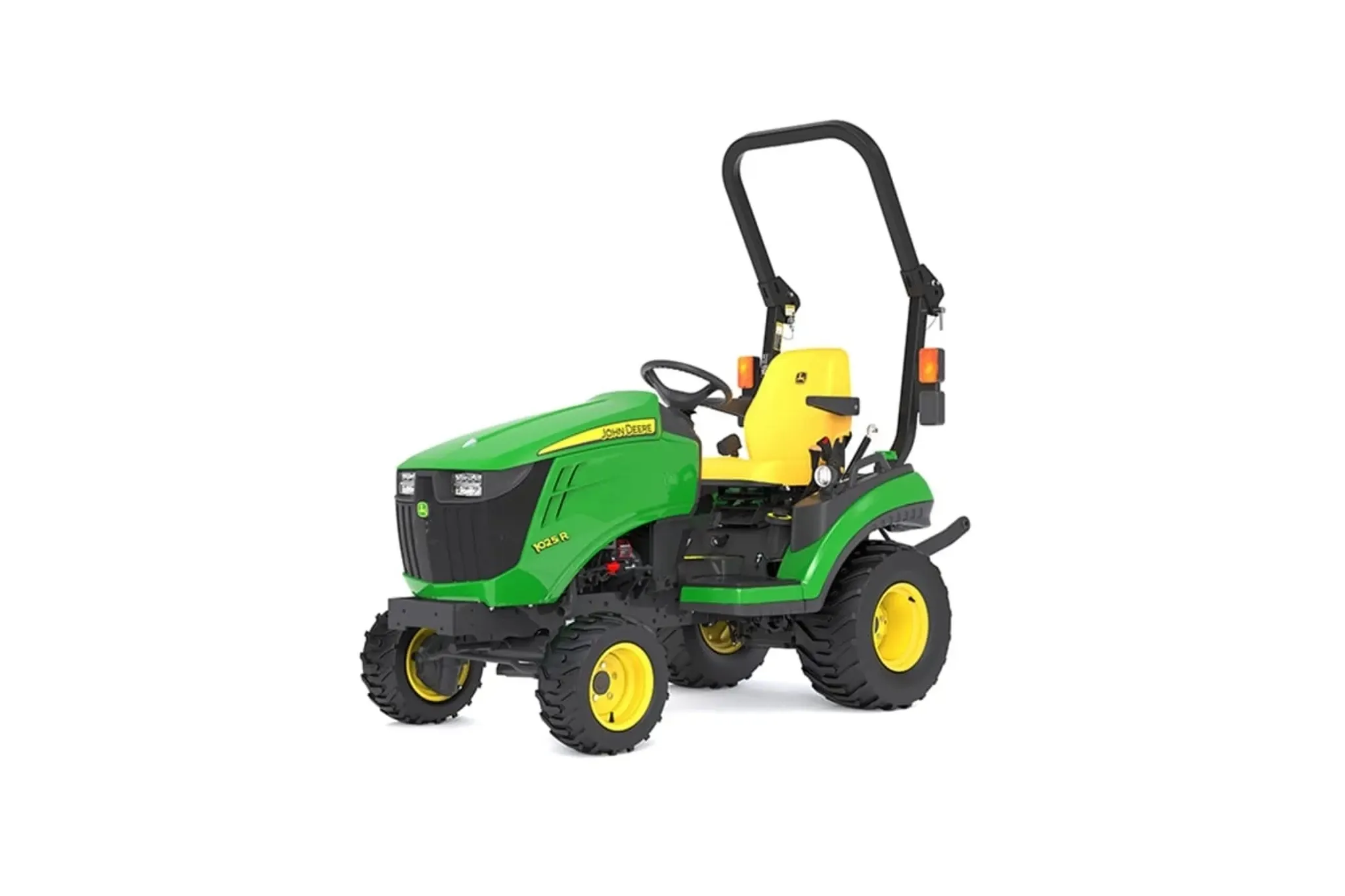
Pick 3
John Deere 1025R
Sub-Compact
Sub-compact example showing that loaders are available on small frames — ideal when chores are light but frequent, with attention to ballast and stability.
Verified specifications for John Deere 1025R Engine horsepower 23.9 HP Operating weight 1,556 lbs Rear hitch lift @ 24″ 758 lbs @ 24″
How size classes compare
Tractor size classes (typical range)
Sub-Compact
1–5 acres
Loader and mower
Compact
5–20 acres
Bush hog and tiller
Utility
15+ acres
Hay and heavy implements
Illustrative: match class to property size and implement load, not horsepower alone.
Loader chores that justify the purchase
Driveway gravel, snow piles, compost and mulch, clearing debris, light grading, and moving small square bales or bagged feed. If two or more of these are weekly tasks, a loader usually earns its keep.
Loader specs are not hitch specs
Manufacturers publish loader lift at the bucket pin separately from rear three-point hitch capacity. Our profile tables show rear hitch lift at the link arms only. Use the loader chart on the OEM page when sizing buckets and loads.
Ballast and stability
Lifting heavy loads on small tractors may require rear ballast or a mounted implement for safe steering. Your dealer should set up ballast when delivering a loader package — do not skip this on sub-compacts.
Weekly lift cycles decide it
If you move dirt, manure, gravel, or feed weekly, a loader pays. Occasional bags of mulch may not. Loader lift charts are separate from rear three-point Facts.
Ballast after the loader
Front loaders need rear ballast for stability. That does not change hitch category; it changes how safe the tractor feels on grades — follow OEM ballast guidance.
FAQ
- Can I add a loader later?
- Often yes, if the frame is loader-ready and a compatible loader model exists. Factory packages sometimes cost less than retrofitting — price both when buying new.
- Is a grapple worth it?
- Grapples help brush, logs, and loose debris when you already loader often. They add cost but reduce manual chain work for cleanup chores.
- Do I need a loader if I only bush hog?
- If mowing and rotary cutting are your only tasks, a loader is optional. Many bush-hog-only owners skip the loader until driveway or snow work appears.