Sub-Compact vs. Compact Tractor: Which Do You Need?
By Roy Messiah · Last updated: 2 July 2026
Top pick tractors in this guide
The bottom line
Choose a sub-compact when maneuverability, turf care, and tight storage drive your buying decision. Choose a compact when you need more rear hitch capacity, loader stability, and implement flexibility for regular property work beyond mowing. Most five- to fifteen-acre mixed-chore buyers land in compact class — but a sub-compact beats an oversized machine you cannot store or turn easily.
Numeric specs in pick tables come from manufacturer pages in our verified database — not from AI-generated text.
Top picks
Pick 1
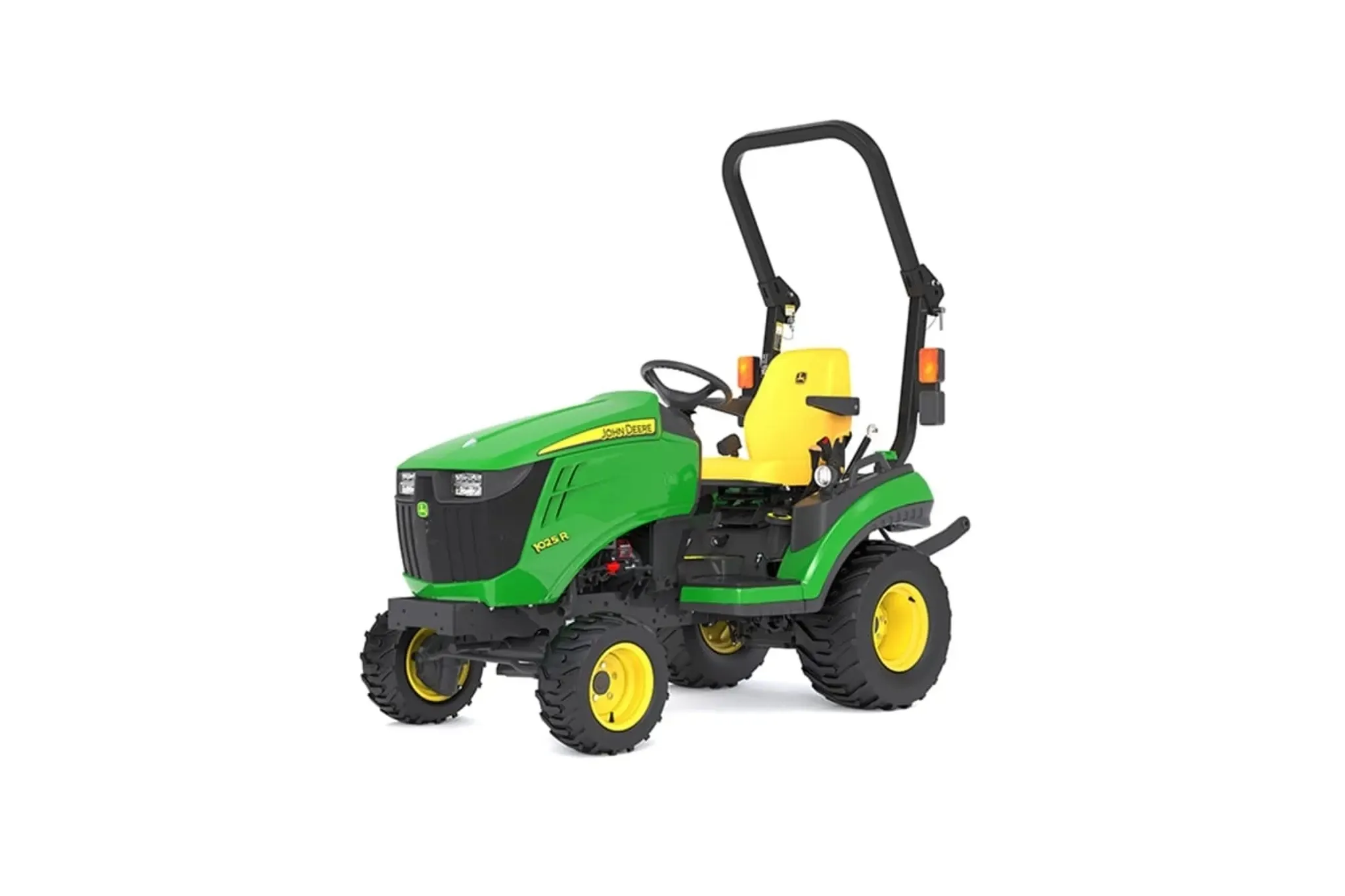
John Deere 1025R
Sub-Compact
Representative sub-compact — ideal reference point for buyers prioritizing tight turns, mid-mount mowing, and minimal footprint on landscaped property.
Verified specifications for John Deere 1025R Engine horsepower 23.9 HP Operating weight 1,556 lbs Rear hitch lift @ 24″ 758 lbs @ 24″ 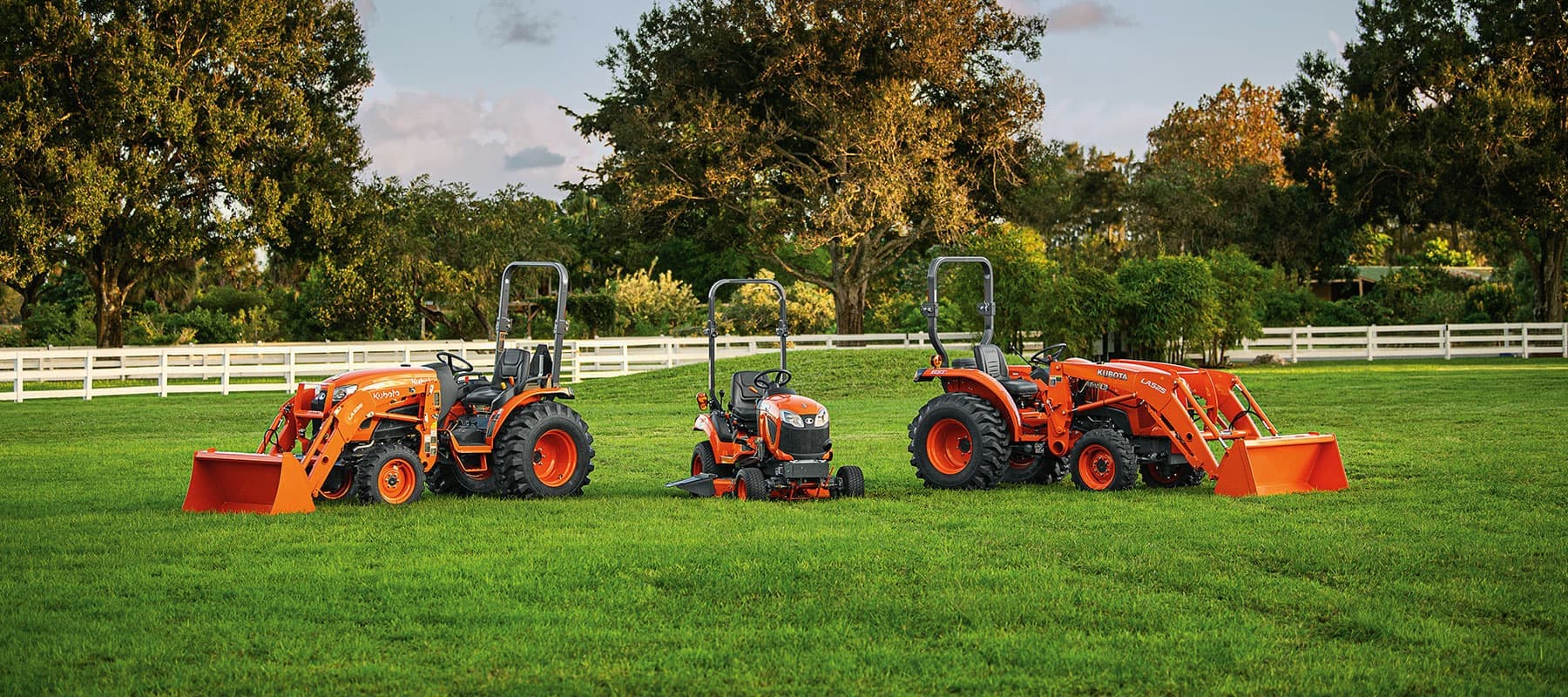
Pick 2
Kubota L2501
Compact
Representative compact — the step-up choice when loader work, heavier implements, and small-acreage versatility matter more than minimum size.
Verified specifications for Kubota L2501 Engine horsepower 24.8 HP Operating weight 2,623 lbs Rear hitch lift @ 24″ 1,389 lbs @ 24″
How size classes compare
Tractor size classes (typical range)
Sub-Compact
1–5 acres
Loader and mower
Compact
5–20 acres
Bush hog and tiller
Utility
15+ acres
Hay and heavy implements
Illustrative: match class to property size and implement load, not horsepower alone.
Size class in plain English
Sub-compact tractors are the smallest diesel utility machines — often used like a heavy-duty lawn tractor with a three-point hitch and rear PTO. Compact tractors add frame mass, hydraulic capacity, and implement options for serious property maintenance and small-farm chores. Utility class is a further step up for hay, heavy loader cycles, and larger implements — usually more than independent operators on small acreage need at first purchase.
When sub-compact wins
Pick sub-compact if your barn door clearance is tight, your lanes are narrow, or most work is finish mowing and light landscaping. Sub-compacts are easier to trailer, gentler on turf, and simpler for first-time buyers learning three-point hitch operation. The tradeoff is lower rear hitch capacity — heavy rotary cutters, large box blades, and round bale handling are often out of reach.
When compact wins
Pick compact if loader work, rougher terrain, or heavier implements are weekly tasks — not once-a-year exceptions. Compacts carry more weight for stability on slopes and provide rear hitch capacity for implements sub-compacts cannot safely lift. The tradeoff is size: verify turning radius, transport width, and storage before you commit.
Compare verified specs, not brochure adjectives
Use the spec tables on our pick cards and profile pages — engine horsepower, operating weight, and rear hitch lift at the link arms — to compare machines in each class. Prose recommendations explain tradeoffs; numbers come from manufacturer pages in our database only.
FAQ
- Can a sub-compact pull a bush hog?
- Sometimes, for small cutters on flat ground — but PTO and hitch capacity must match the implement, and stability matters on slopes. Many buyers who plan regular brush cutting step up to compact class. See our bush hog horsepower guide for sizing framework.
- Is compact too big for a suburban property?
- It can be — measure gate openings, storage length, and typical turning paths. If those are tight, sub-compact may be the better daily driver even if compact specs look attractive on paper.
- Does heavier weight always mean better?
- More weight helps traction and stability for loader and implement work, but hurts turf compaction and maneuverability. Match weight to your ground conditions and tasks — not a maximum number.
- Should I buy new or used?
- Either can work for independent operators. New machines offer warranty and known maintenance history; used values vary by hours and regional supply. Size the class correctly first — a used utility tractor that is too large is still the wrong buy.