Best Sub Compact Tractor (2026 Buyer’s Guide)
By Roy Messiah · Last updated: 27 September 2026
Top pick tractors in this guide
The bottom line
For sub-compact buyers choosing among these closed-domain peers, start with the John Deere 1025R when dealer support and the attachment ecosystem matter; choose the Kubota BX2380 when turf/fleet fit and its verified PTO edge (17.7 vs 17.2 PTO HP) matter; choose the TYM T254 when value and its verified rear lift (1,101 lb @ 24″) lead. All three use Limited Cat I. Front loader lift remains Partial until the exact OEM package sheet is checked, and engine HP is not PTO HP.
Numeric specs in pick tables come from manufacturer pages in our verified database — not from AI-generated text.
Cross-pick Fact table
| Spec | John Deere 1025R | Kubota BX2380 | TYM T254 |
|---|---|---|---|
| Engine HP | 23.9 | 21.6 | 23.9 |
| PTO HP | 17.2 | 17.7 | 18.8 |
| PTO RPM | 540 | 540 | 540 |
| Hitch | Limited Cat I | Limited Cat I | Limited Cat I |
| Rear lift @ 24″ | 758 lb | 680 lb | 1,101 lb |
| Operating weight | 1,556 lb | 1,455 lb | 1,638 lb |
| Size class | Sub-Compact | Sub-Compact | Sub-Compact |
| Front loader lift | Partial | Partial | Partial |
Top picks
Pick 1
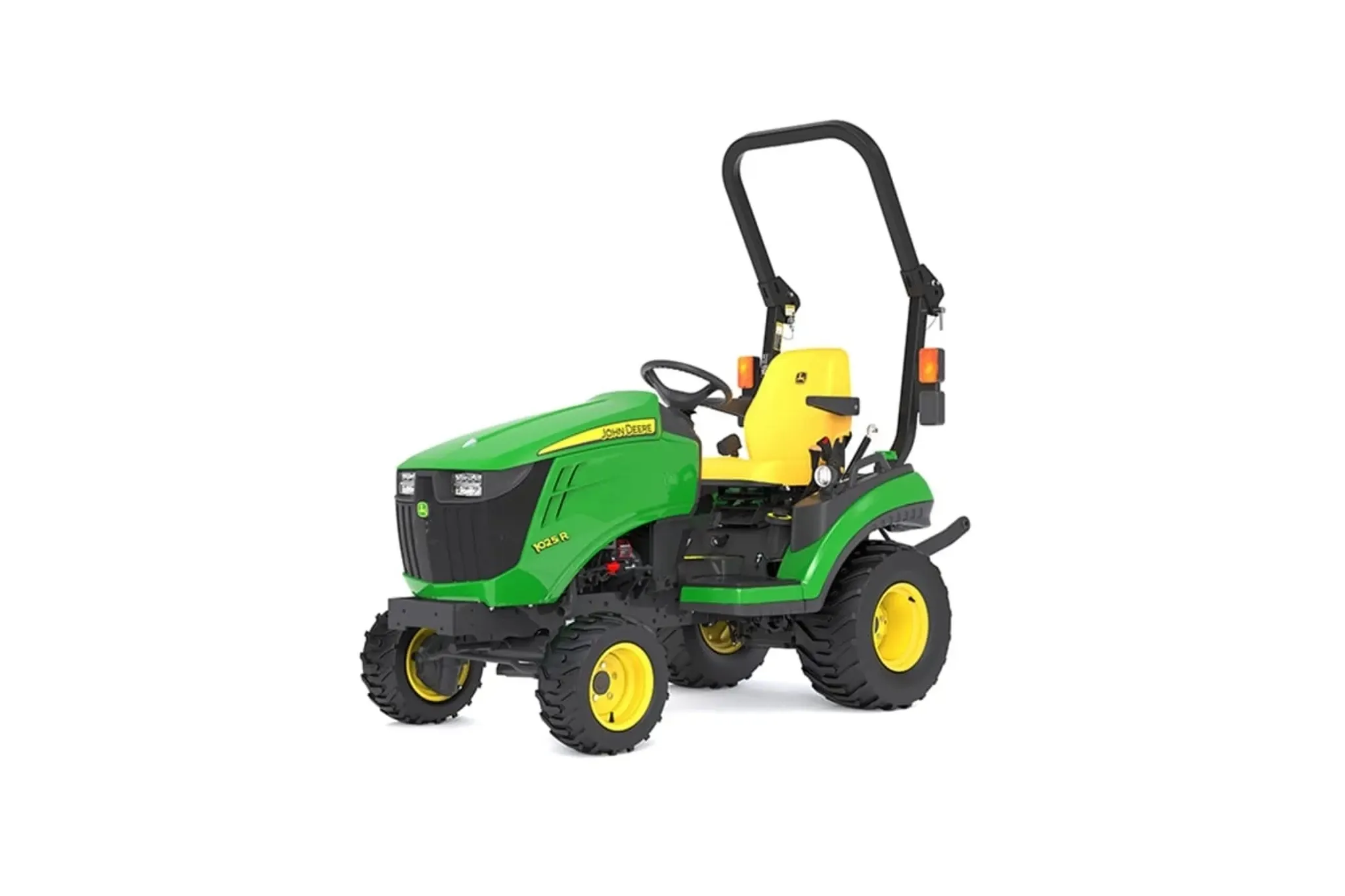
John Deere 1025R
Sub-Compact
Industry reference sub compact tractor — excellent for mid-mount mowing, tight turns, and first-time buyers who want a deep attachment catalog and wide dealer network.
Verified specifications for John Deere 1025R Engine horsepower 23.9 HP Operating weight 1,556 lbs Rear hitch lift @ 24″ 758 lbs @ 24″ Hitch category Limited Category I PTO horsepower 17.2 PTO HP PTO RPM 540 RPM Front loader lift: Partial — look up the OEM sheet for the exact loader package.
Pick 2
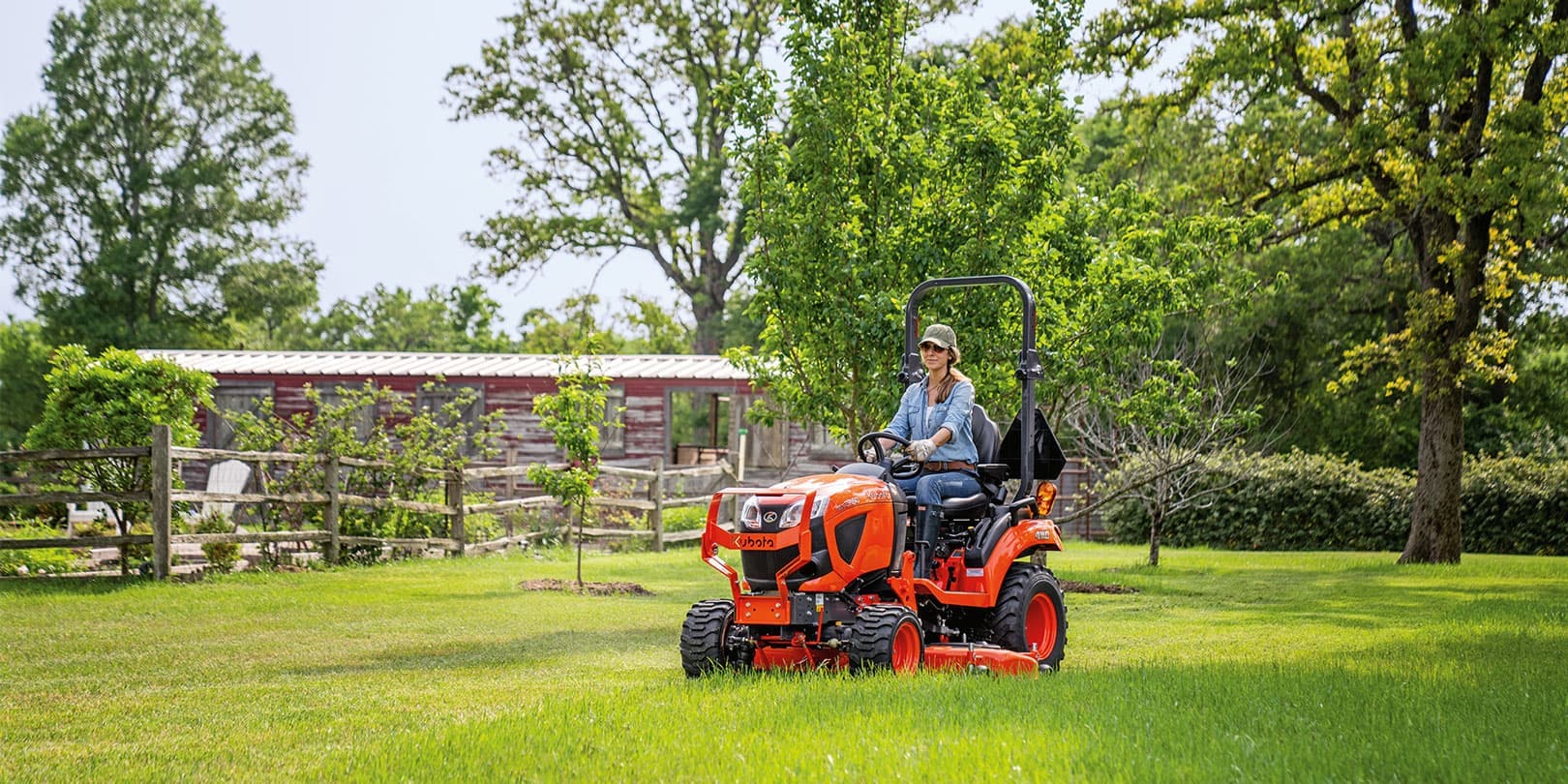
Kubota BX2380
Sub-Compact
Kubota's core subcompact choice for owners who prioritize turf work and a familiar orange fleet on small properties.
Verified specifications for Kubota BX2380 Engine horsepower 21.6 HP Operating weight 1,455 lbs Rear hitch lift @ 24″ 680 lbs @ 24″ Hitch category Limited Category I PTO horsepower 17.7 PTO HP PTO RPM 540 RPM Front loader lift: Partial — look up the OEM sheet for the exact loader package.
Pick 3
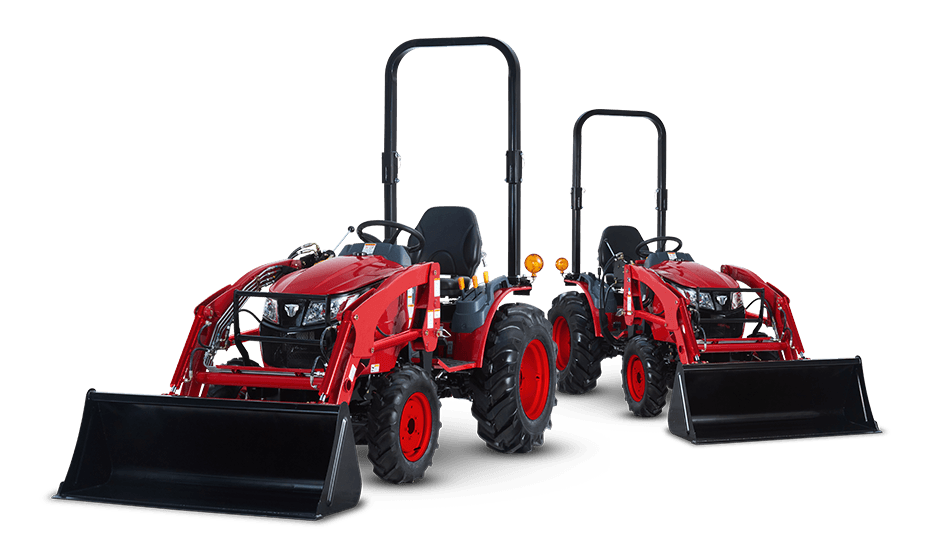
TYM T254
Sub-Compact
Value pick for budget-conscious buyers who still want diesel PTO, four-wheel drive, and loader-ready capability in sub-compact size.
Verified specifications for TYM T254 Engine horsepower 23.9 HP Operating weight 1,638 lbs Rear hitch lift @ 24″ 1,101 lbs @ 24″ Hitch category Limited Category I PTO horsepower 18.8 PTO HP PTO RPM 540 RPM Front loader lift: Partial — look up the OEM sheet for the exact loader package.
How size classes compare
Tractor size classes (typical range)
Sub-Compact
1–5 acres
Loader and mower
Compact
5–20 acres
Bush hog and tiller
Utility
15+ acres
Hay and heavy implements
Illustrative: match class to property size and implement load, not horsepower alone.
What is a sub compact tractor?
Sub compact tractors (also called subcompact or sub-compact utility tractors) sit below full compact class in size, weight, and implement capacity. They are built for property owners who need diesel PTO and a three-point hitch without the footprint of a farm tractor. If your weekly work is finish mowing, light loader chores, snow on short lanes, or garden tillage — and storage or gate width is tight — subcompact class is usually the right starting point.
Who should buy a subcompact?
Buy a sub compact tractor when maneuverability, turf care, and storage size matter more than maximum implement capacity. Typical buyers have one to ten acres of mixed light chores — not commercial hay or heavy earthmoving. If you regularly run a heavy rotary cutter, move large bales, or grade long gravel roads, compare compact class before you commit.
What sub compact tractors do well
Finish mowing with mid-mount decks, driveway and path snow removal, light loader work, garden tillage, and fencing support. They are easier to trailer and gentler on turf than larger compact tractors. Many buyers choose a subcompact as a first tractor — then step up only if weekly tasks outgrow rear hitch capacity.
Where subcompacts fall short
Heavy brush cutters, large box blades, round-bale handling, and steep slope work often exceed what a sub-compact hitch and frame handle comfortably. That is not a brand failure — it is class design. Match the machine to your heaviest regular job, not your worst day once a year. If brush-hogging is weekly, open Fit for a rotary cutter and expect Partial PTO or a step-up to compact rather than forcing a subcompact past its shaft Facts.
Read the pick Fact table before the brochure
On each pick below, the Fact table shows verified engine HP, operating weight, rear hitch lift, hitch category, PTO HP, and PTO RPM from our OEM overlay — not marketing copy. Loader lift is not in that table: our published lift Fact is rear three-point only. Treat front loader capacity as Partial / look it up on the OEM loader sheet for the exact loader package your dealer quotes. Never shop on engine HP alone when a finish mower or blower needs PTO shaft power.
Choose among our picks (A vs B when)
Choose the John Deere 1025R when dealer coverage, mid-mount mower convenience, and first-tractor confidence matter most — then Compare it to the BX2380 on hitch, PTO, and weight Facts before you sign. Choose the Kubota BX2380 when you already prefer the orange ecosystem, turf finish, and BX-class attachments near you. Choose the TYM T254 when budget and loader-ready diesel utility matter more than brand prestige — still verify local service, then Compare it to the BX2380 as a familiar same-class ecosystem alternative. Do not pick from brochure horsepower alone, and do not invent loader lift from rear hitch numbers.
Stay subcompact, step up, or step down
Stay in subcompact when gates, storage, and turf mowing dominate and your heaviest weekly implement is light (finish mower, small tiller, light snow). Step up to compact when weekly work includes heavier rotary cutting, longer gravel grading, or loader cycles that feel unstable on a light frame — then Compare compact peers such as the 2032R and L2501 instead of shopping across classes. Step down toward a heavy garden tractor only if chores stay turf-only with no real three-point implements. Class first, then peer Facts — that order beats cross-shopping on a single HP number.
Screen implements with Fit before you buy
Fit is hitch category, PTO shaft power and RPM, and lift — not engine marketing. Open the Attachment Fit checker for finish mower, rotary cutter, snow blower, or box blade against the tractor you are quoting (start at /en/fit). Partial means a Fact is missing on our sheet — usually PTO — so look it up on the OEM page for your serial year; we never invent shaft ratings. Loader-package buyers still confirm rear hitch if a blade or cutter shares the machine, and separately look up loader lift on the OEM loader chart.
Compare peers after you pick a class
Within Sub-Compact, use the Compare peers link on each pick card: 1025R vs BX2380 for the premium ecosystem decision, and T254 vs BX2380 when value versus an established attachment ecosystem is the decision. That keeps you inside same-class peer Facts for operating weight, rear lift, hitch category, and PTO. If you already decided compact is the right class, leave this guide and Compare inside compact — do not treat a subcompact vs compact pair as a same-class peer Comp.
Need ranked picks for your property? Use Advisor
If you want two or three closed-domain recommendations from our verified model set — not an open-web chatbot list — start the Advisor with your property size, terrain, and budget. Advisor only ranks models in our database; if nothing matches, it says so. Use it after you decide subcompact vs compact, then come back to Fit for the implement you will run weekly.
Cab vs open station on a subcompact
Open station keeps cost and height down and is common on sub compact tractors. Consider a cab or canopy if you work long hours in sun, wind, or cold — availability varies by model and region. For snow-country buyers, wind protection often matters more than a few extra inches of width — still measure storage clearance.
FAQ
- What is the difference between sub compact and compact?
- Sub compact tractors are smaller, lighter, and more maneuverable. Compacts add frame mass, hitch capacity, and implement flexibility for heavier regular work. Stay in class first, then Compare peers on verified hitch and PTO Facts.
- Should I choose a 1025R or a BX2380?
- Same class, different ecosystems. Prefer the 1025R for Deere dealer density and mid-mount catalog depth; prefer the BX2380 when Kubota service and BX attachments are stronger near you. Compare the pair on hitch category and PTO Facts, then Fit your mower or blower — and look up loader lift on the OEM loader sheet (Partial here).
- When should I step up from subcompact to compact?
- When your weekly heaviest job outgrows subcompact hitch comfort — heavy cutters, long grading runs, or unstable loader cycles. Pick compact class first, then Compare compact peers; do not cross-shop classes on brochure HP alone.
- Can a subcompact run a brush hog (rotary cutter)?
- Sometimes for light fence-line work with a matched small cutter — but weekly brush-hogging often belongs in compact class. Open Fit for rotary cutter on the tractor you are quoting; Partial means look up PTO on the OEM sheet. We never invent shaft ratings.
- How do I check if an implement fits a subcompact?
- Use the Attachment Fit checker with the implement type selected, or open the matching does-it-fit guide. Confirm serial-year OEM sheets; Partial means a Fact is missing — usually PTO. Loader lift is a separate OEM look-up, not our rear hitch Fact.