PTO Horsepower vs Engine Horsepower
By Roy Messiah · Last updated: 19 July 2026
Top pick tractors in this guide
The bottom line
Engine horsepower is power at the crankshaft; PTO horsepower is what reaches the implement shaft after drivetrain losses. Size rotary cutters, tillers, and other PTO tools from the manufacturer’s PTO requirement — never from engine rating alone. On compact tractors, PTO HP is often several horsepower below the advertised engine figure.
Numeric specs in pick tables come from manufacturer pages in our verified database — not from AI-generated text.
How size classes compare
Tractor size classes (typical range)
Sub-Compact
1–5 acres
Loader and mower
Compact
5–20 acres
Bush hog and tiller
Utility
15+ acres
Hay and heavy implements
Illustrative: match class to property size and implement load, not horsepower alone.
Top picks
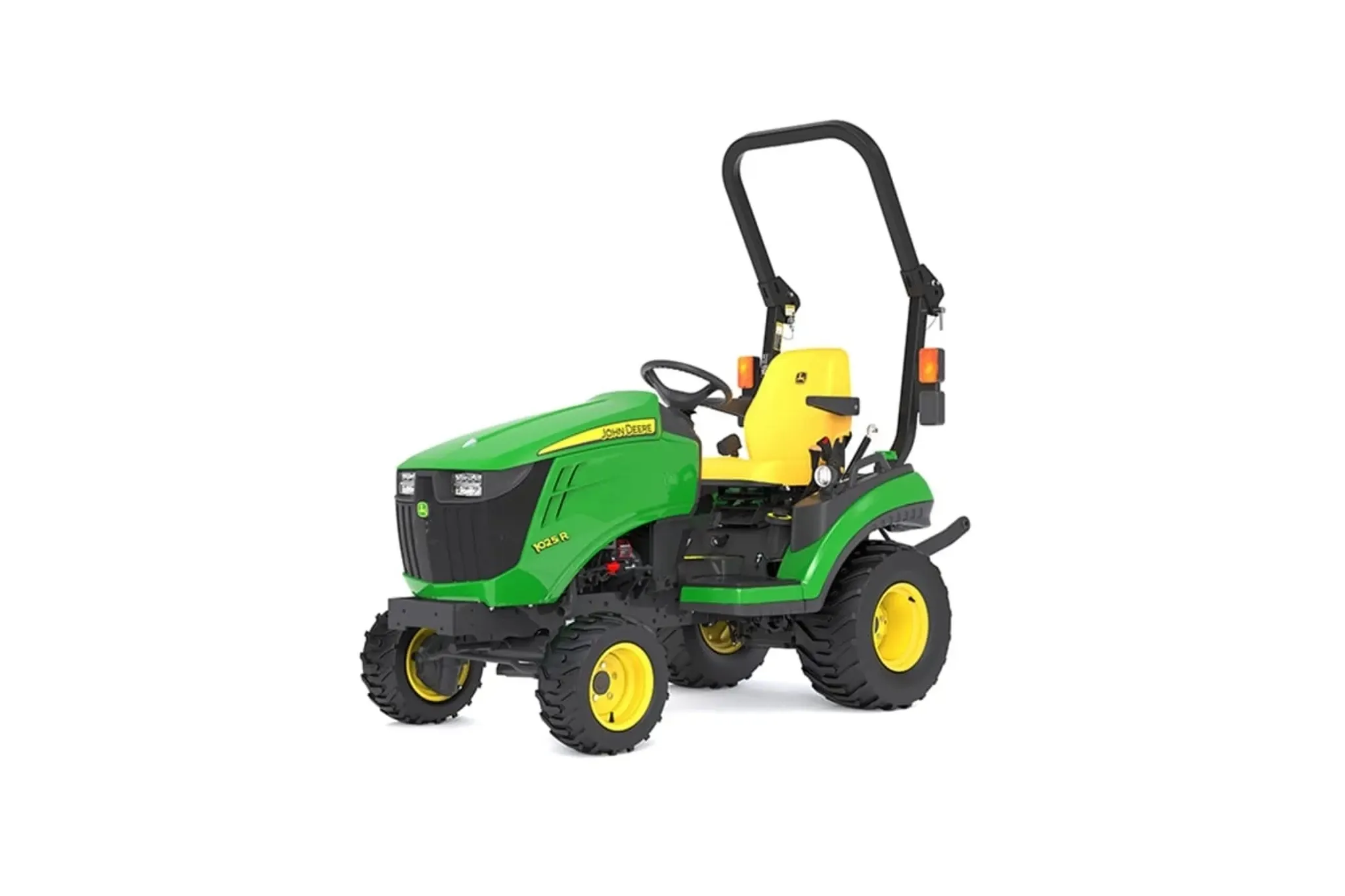
Pick 1
John Deere 1025R
Sub-Compact
Clear sub-compact example where engine rating and shaft power differ — useful when reading cutter charts.
Verified specifications for John Deere 1025R Engine horsepower 23.9 HP Operating weight 1,556 lbs Rear hitch lift @ 24″ 758 lbs @ 24″ 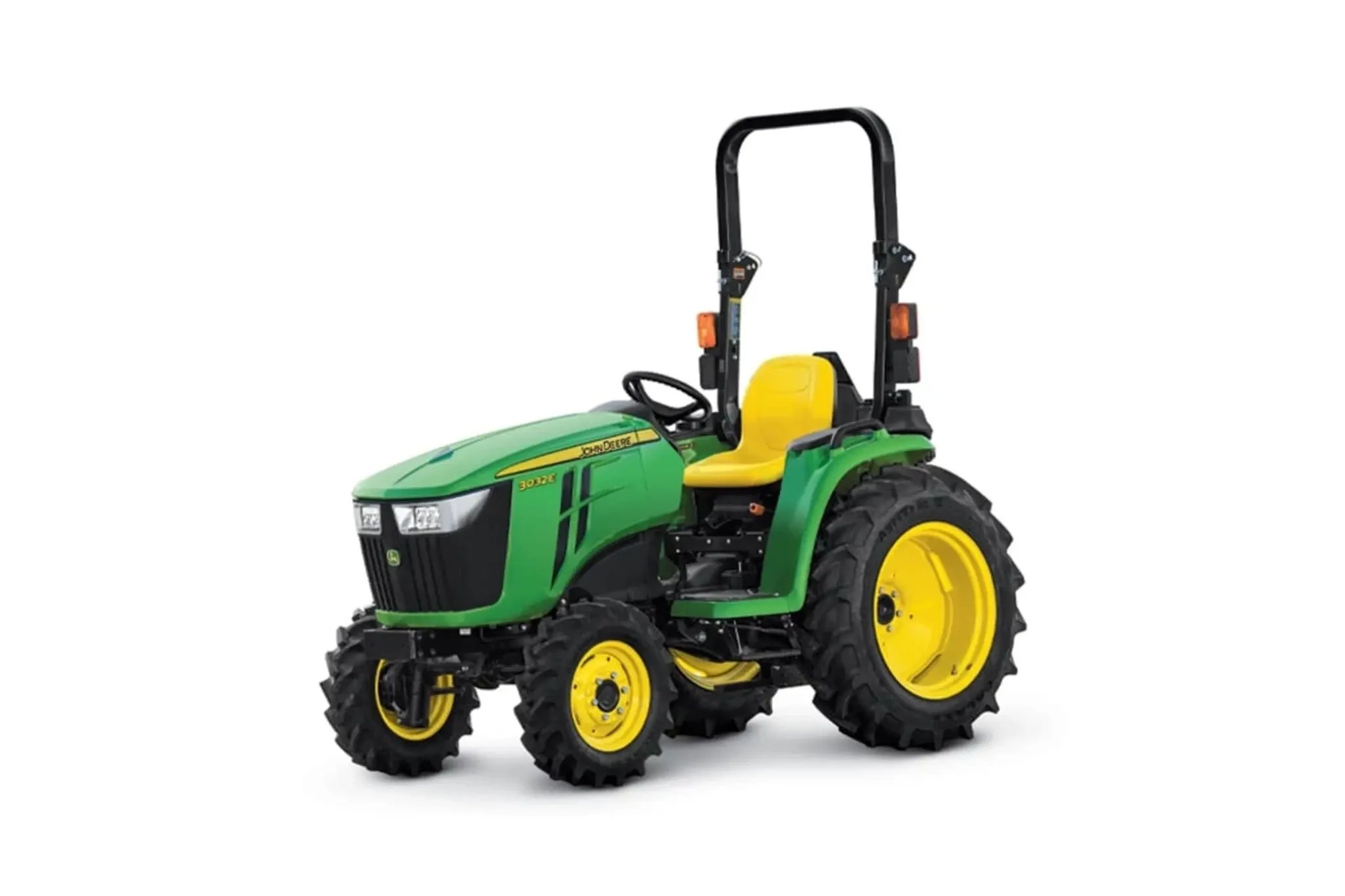
Pick 2
John Deere 3032E
Compact
Compact with a published PTO rating that shows why implement sheets must be matched to shaft power, not the hood figure alone.
Verified specifications for John Deere 3032E Engine horsepower 31.1 HP Operating weight 2,222 lbs Rear hitch lift @ 24″ 1,356 lbs @ 24″ 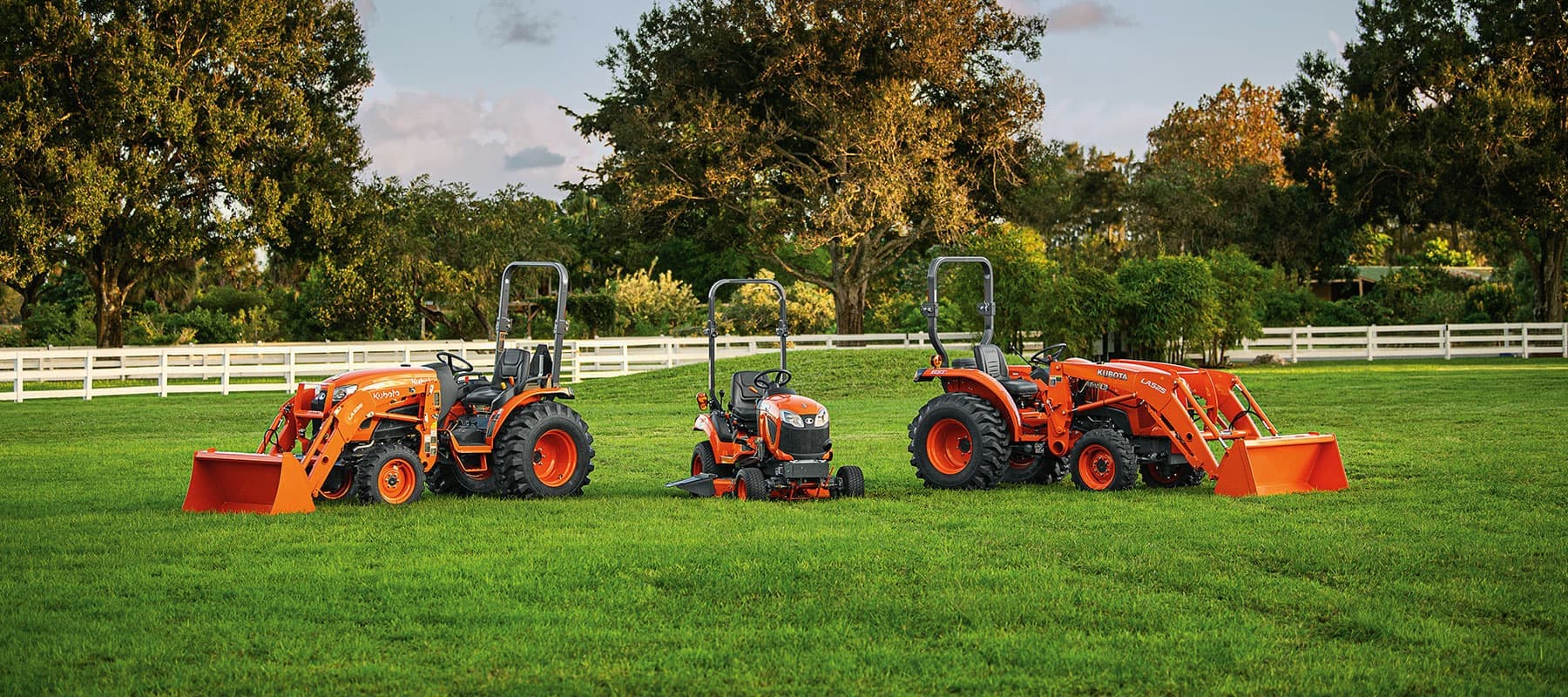
Pick 3
Kubota L2501
Compact
Common L-Series reference when buyers confuse brochure engine ratings with the PTO number on implement sheets.
Verified specifications for Kubota L2501 Engine horsepower 24.8 HP Operating weight 2,623 lbs Rear hitch lift @ 24″ 1,389 lbs @ 24″
What PTO means
PTO stands for power take-off — the spinning shaft (usually at the rear, sometimes mid-mount) that drives implements. Rear PTO on these machines is typically five-hundred-forty RPM. If an implement needs PTO power, the tractor must deliver that power at the shaft, not merely list a higher engine rating on the hood.
Why the numbers differ
Gearboxes, clutches, and hydraulic pumps consume power before it reaches the PTO. OEM sheets therefore publish both gross engine horsepower and PTO horsepower. Our profiles store engine horsepower as a Fact; PTO overlays on the Fit checker are added only when we have an OEM source. Missing PTO Facts show as Partial — we do not invent shaft ratings.
How to buy implements correctly
Open the implement requirement sheet first (minimum PTO horsepower, hitch category, weight). Then confirm the tractor’s PTO horsepower and hitch class on the manufacturer page for your model year. Use the Attachment Fit checker for a paper screen, then verify serial-year OEM manuals before purchase. For cutters specifically, see Does a rotary cutter fit my tractor?
How we show the gap on this site
Profiles store engine horsepower as a catalog Fact. Fit uses verified PTO overlays when we have an OEM source. Missing PTO stays Partial — we never invent shaft ratings to make a cutter “fit.”
Buy the implement from the shaft number
Open the cutter, tiller, digger, or blower sheet. Note minimum PTO HP and RPM. Confirm the same numbers on the tractor OEM page for your transmission. Then run Fit. Engine HP is background context, not the decision.
Transmission options change PTO Facts
Hydrostatic vs gear packages on the same model can publish different PTO ratings. Quote the exact build you are buying. Partial on Fit often means that sheet was not overlaid yet — look it up.
FAQ
- Can I use engine horsepower instead of PTO horsepower?
- No for PTO implements. Engine horsepower overstates available shaft power. Dealers sometimes speak loosely in engine horsepower — insist on the PTO figure from the OEM sheet.
- What about box blades and rear blades?
- Those usually do not need PTO. Fit is driven by hitch category, lift capacity, and ballast — not shaft horsepower.
- Where do I find PTO horsepower for my tractor?
- On the manufacturer specification page or operator’s manual. Our Fit checker lists PTO when we have verified overlays; otherwise it flags Partial so you know to look it up.
- Why is my engine HP much higher than PTO HP?
- Losses through the drivetrain and how manufacturers rate continuous PTO output. The implement cares about shaft power — use that Fact.