How to Match Implements to Your Tractor
By Roy Messiah · Last updated: 19 July 2026
Top pick tractors in this guide
The bottom line
Match implements using manufacturer charts for PTO horsepower, hitch category, lift capacity, and hydraulic flow — not engine rating alone or dealer verbal assurances. List your heaviest weekly implement first, verify the tractor meets that requirement on the OEM sheet, then size lesser tools within the same margins. Use our Attachment Fit checker for a paper screen; treat Partial as “look up the missing Fact,” never as a green light.
Numeric specs in pick tables come from manufacturer pages in our verified database — not from AI-generated text.
Top picks
Pick 1
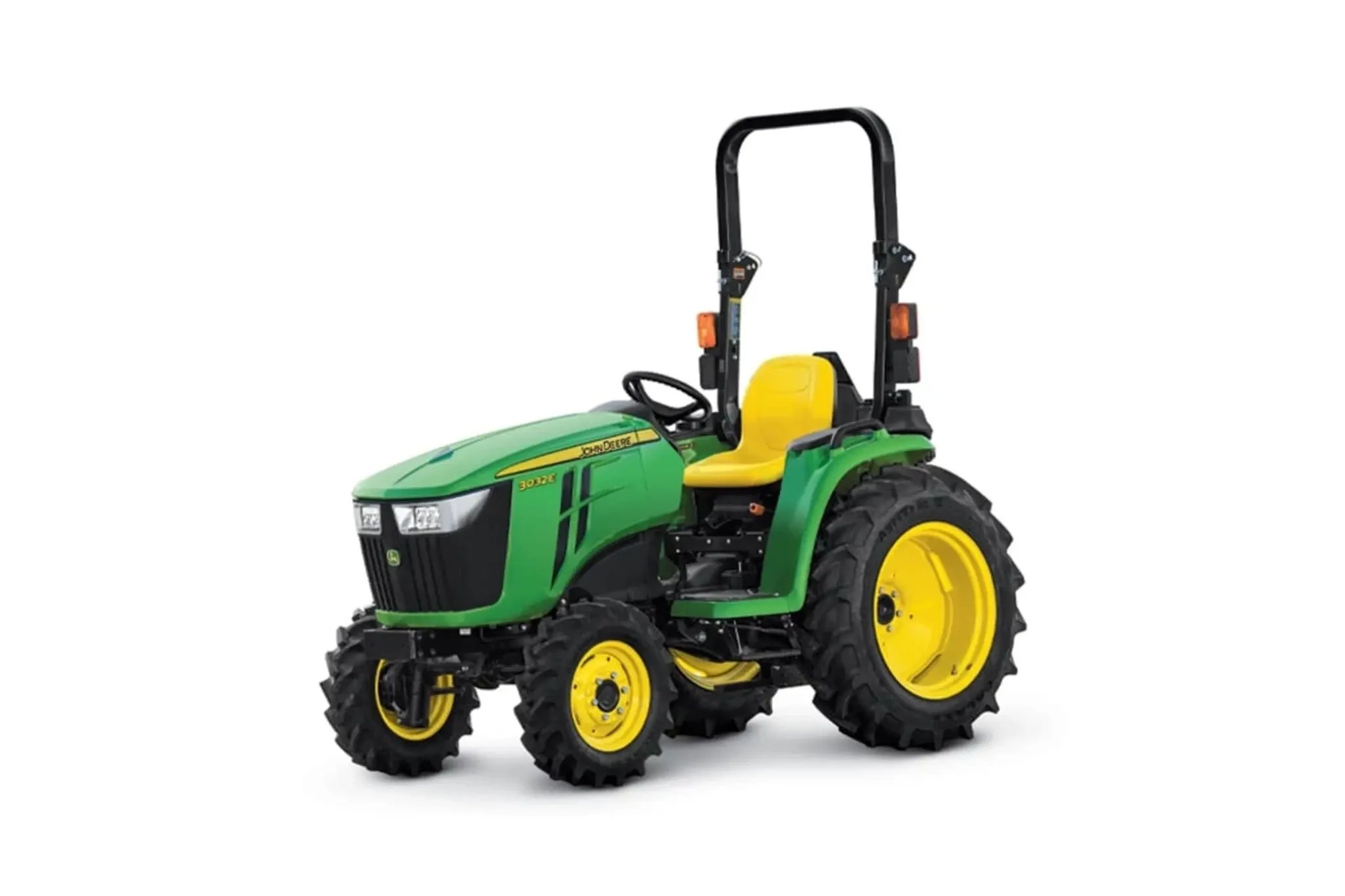
John Deere 3032E
Compact
Value compact commonly paired with mowers and blades — useful reference when learning to read Deere implement compatibility charts.
Verified specifications for John Deere 3032E Engine horsepower 31.1 HP Operating weight 2,222 lbs Rear hitch lift @ 24″ 1,356 lbs @ 24″ 
Pick 2
Kubota L3902
Compact
Mid compact with hitch headroom illustrating how one tractor frame covers multiple implement types when charts align.
Verified specifications for Kubota L3902 Engine horsepower 37.5 HP Operating weight 2,778 lbs Rear hitch lift @ 24″ 1,435 lbs @ 24″ 
Pick 3
Kioti CK4020
Compact
Heavier compact example for buyers approaching utility implements who must verify hitch category and PTO speed carefully.
Verified specifications for Kioti CK4020 Engine horsepower 39.6 HP Operating weight 2,679 lbs Rear hitch lift @ 24″ 1,631 lbs @ 24″
How size classes compare
Tractor size classes (typical range)
Sub-Compact
1–5 acres
Loader and mower
Compact
5–20 acres
Bush hog and tiller
Utility
15+ acres
Hay and heavy implements
Illustrative: match class to property size and implement load, not horsepower alone.
Start with the heaviest weekly job
Write down the implement you will run most often at full duty — rotary cutter, tiller, box blade, snow blower — not the tool you might buy “someday.” That sheet sets the tractor’s minimum hitch class, PTO shaft power, lift, and often ballast. Size the machine to that job first; lighter tools usually follow. Shopping the other way around is how sub-compacts end up paired with five-foot cutters that fail on paper.
PTO horsepower vs. engine horsepower
Implement manuals specify PTO power at the shaft. Engine horsepower on the hood is marketing for the crankshaft after (or before) some losses — it is not a substitute. Our profiles store engine horsepower as a Fact; PTO overlays appear on Fit only when we have an OEM source. Missing PTO shows as Partial. Read our PTO vs engine guide, then confirm the shaft number on the tractor OEM page for your transmission before you buy a cutter, tiller, or snow blower.
Hitch category and lift capacity
Three-point hitch category and lift at the link arms must carry the implement at operating angles. Limited Category I on many sub-compacts is not automatic interchange with a sheet that only says “Cat 1.” Loader lift ratings are separate — do not substitute front-end numbers for rear three-point capacity. See Limited Cat I vs Cat 1 and our hitch-categories overview when names get blurry at the dealership.
Hydraulics and remote valves
Grapples, diverter kits, and some spreaders need hydraulic flow and remotes. Count how many functions you will run concurrently and verify pump output on the tractor OEM page before ordering attachments. A tractor that clears hitch and PTO can still fail a loader-plus-grapple workflow if remotes or flow are short.
A five-minute paper screen
Open the implement requirement sheet. Note hitch list, minimum PTO HP, PTO RPM, shipping weight, and any sub-compact note. Open the tractor OEM page for the same build year. Then run the Attachment Fit checker with your model and a matching class-estimate or OEM implement. Compatible on paper still needs serial-year manuals. Incompatible means change width, class, or tractor — not “try it once on a slope.” Partial means fetch the missing Fact (often PTO) and re-check.
What Fit will not invent
Our methodology is simple: we never invent PTO shaft ratings or hitch classes. When an overlay is missing, Fit stays honest with Partial so you know to read the OEM sheet yourself. That is the same Fact vs Claim rule used on profiles and guides. Full detail lives on our methodology page.
FAQ
- Can I run an implement one size larger?
- Risky — overload shows up on slopes and thick material, not flat demos. Manufacturers publish ranges for a reason; margin beats maximum width.
- Does quick hitch change ratings?
- Quick hitches change convenience, not tractor capability. Ratings still come from the tractor and implement OEM charts.
- Where do I find compatibility lists?
- Start with the implement manufacturer requirement sheet, then the tractor OEM spec page for the same build. Our Attachment Fit checker screens hitch, PTO, and lift against class-estimate implements; finish with the OEM manuals for your serial year.
- What does Partial mean in Fit?
- At least one Fact is missing — usually PTO horsepower. It is not a soft pass. Look up the OEM number, then run Fit again.
- Should I trust the dealer’s verbal yes?
- Use it as a lead, not a Fact. Ask for the implement sheet and the tractor OEM hitch/PTO lines for your serial year, then screen them yourself.