How Much Horsepower Do You Need for a Rotary Tiller?
By Roy Messiah · Last updated: 19 July 2026
Top pick tractors in this guide
The bottom line
Size a rotary tiller from PTO horsepower and tiller width — not engine horsepower alone. As a rule of thumb, plan roughly four to five PTO horsepower per foot of tiller width in normal garden soil, and add margin for heavy clay, sod, or primary tillage. Most sub-compacts handle small tillers; compacts handle wider working widths for larger plots.
Numeric specs in pick tables come from manufacturer pages in our verified database — not from AI-generated text.
Top picks
Pick 1
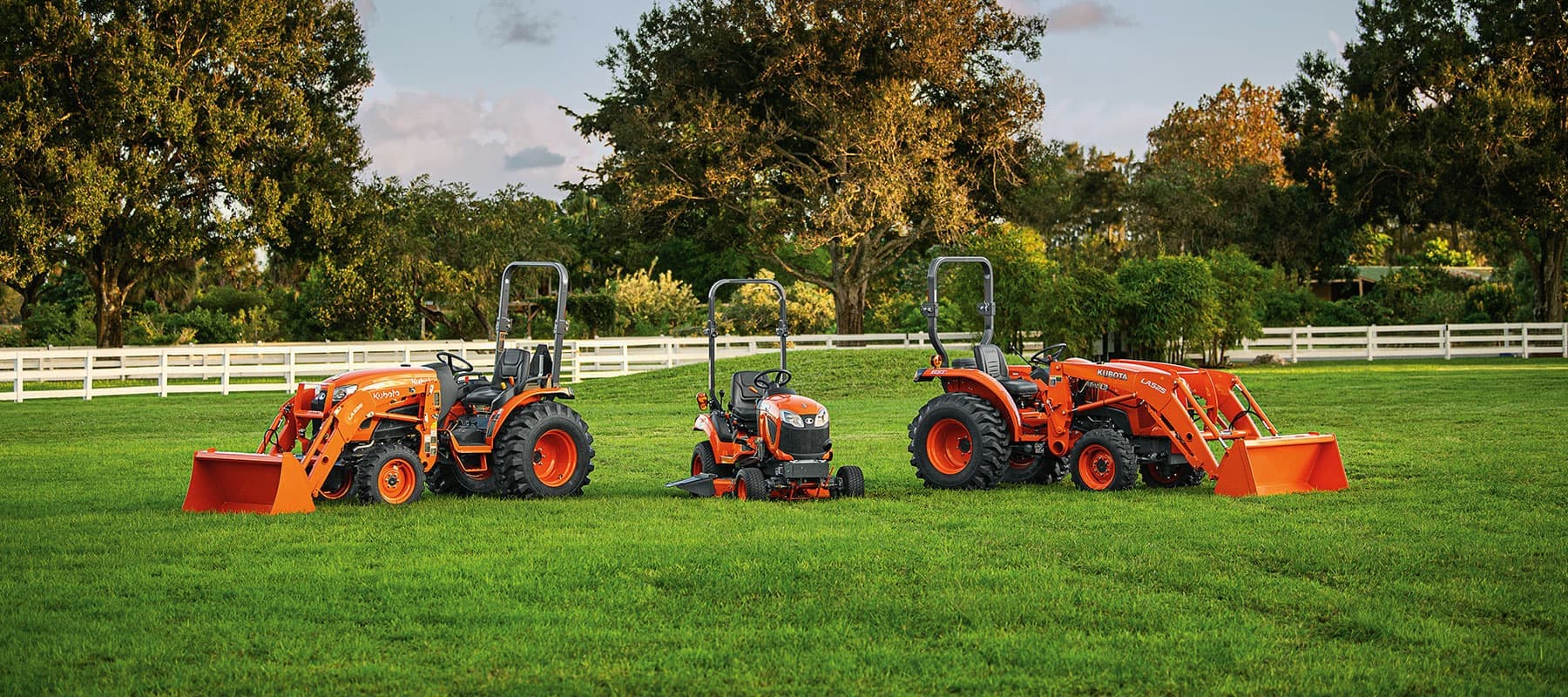
Kubota L2501
Compact
Typical compact reference for garden and food-plot tillers — verify your tiller brand PTO requirement against Kubota's PTO rating on the official spec sheet.
Verified specifications for Kubota L2501 Engine horsepower 24.8 HP Operating weight 2,623 lbs Rear hitch lift @ 24″ 1,389 lbs @ 24″ 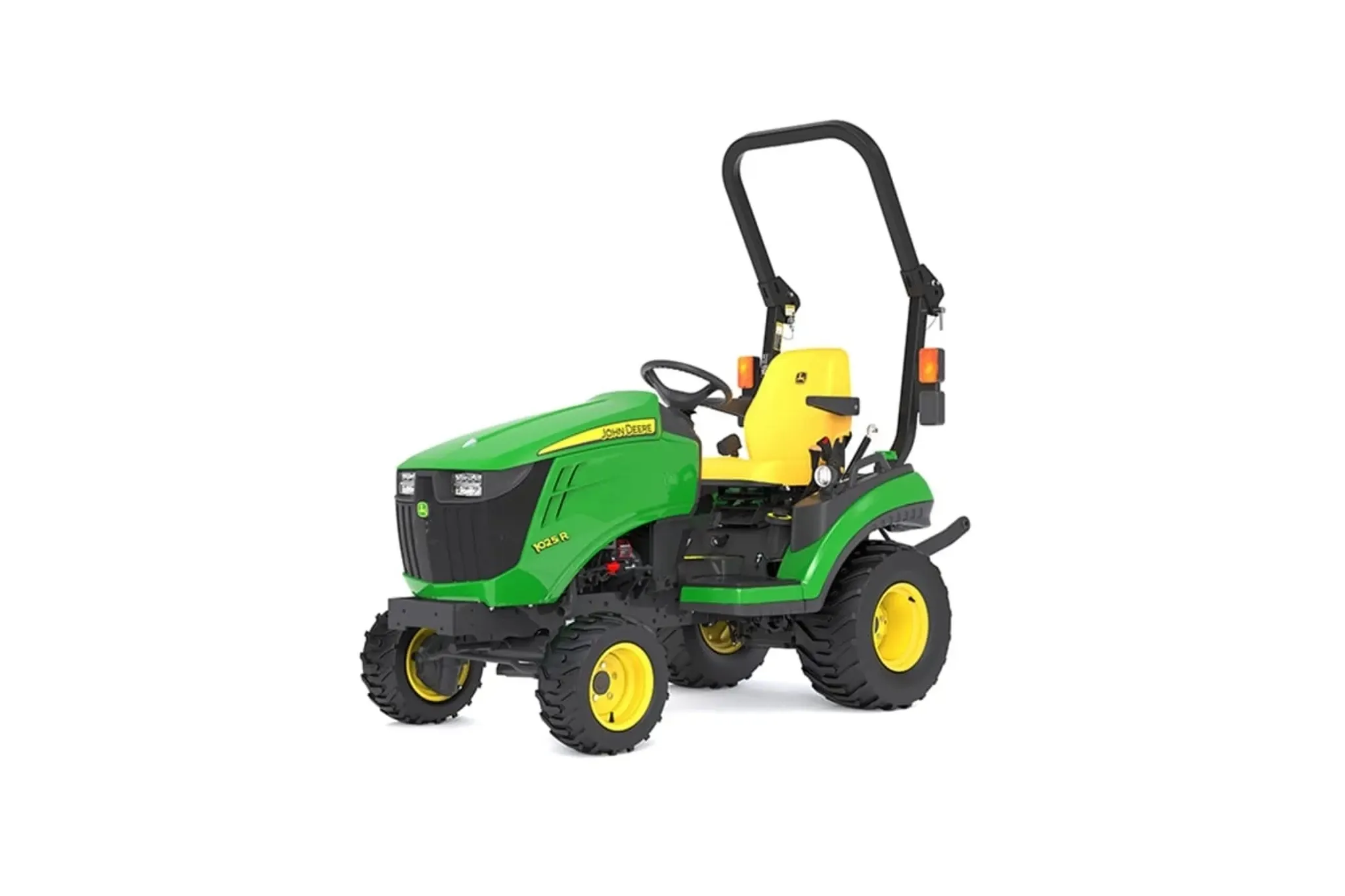
Pick 2
John Deere 1025R
Sub-Compact
Sub-compact example for smaller tillers and raised beds — best when tiller width stays in the light-duty range and soil is manageable.
Verified specifications for John Deere 1025R Engine horsepower 23.9 HP Operating weight 1,556 lbs Rear hitch lift @ 24″ 758 lbs @ 24″ 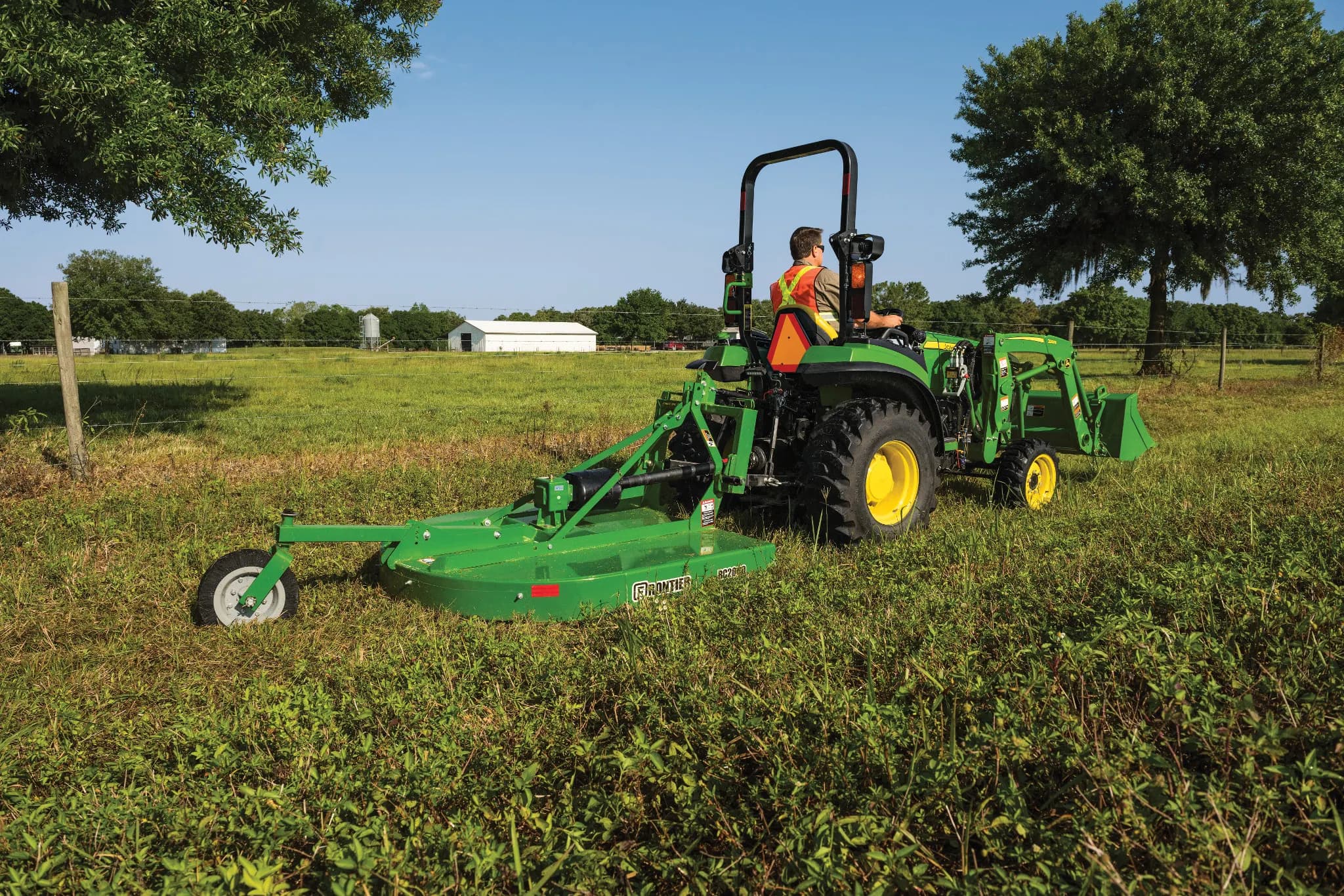
Pick 3
John Deere 2032R
Compact
Compact step-up when you need more PTO headroom for wider tillers or tougher ground on larger gardens and lanes.
Verified specifications for John Deere 2032R Engine horsepower 31.2 HP Operating weight 2,879 lbs Rear hitch lift @ 24″ 1,356 lbs @ 24″
How size classes compare
Tractor size classes (typical range)
Sub-Compact
1–5 acres
Loader and mower
Compact
5–20 acres
Bush hog and tiller
Utility
15+ acres
Hay and heavy implements
Illustrative: match class to property size and implement load, not horsepower alone.
PTO horsepower drives tiller sizing
Tiller manuals specify PTO requirements for width and soil type. Our database stores engine horsepower from OEM tractor sheets — always cross-check PTO on the same sheet before pairing. Do not assume engine and PTO are the same number.
Width and soil matter
Wider tillers need more PTO in clay, sod, and first-time breaking ground than in loose garden beds. Drop one working width size or add PTO margin when soil is heavy or plots are on slopes.
Hitch and transport weight
Tillers are heavy three-point hitch implements. Rear hitch lift at the link arms must support the implement — our spec tables show rear hitch capacity only. Pairing an undersized hitch with an oversized tiller is unsafe even if PTO briefly turns the tines.
Shaft power sets the tiller width
Tiller manuals publish minimum PTO HP for a given width and soil. Match that number to the tractor’s verified PTO Fact. Engine HP “close enough” is how garden tillers stall in packed clay.
Narrower first on light frames
Sub-compacts and light compacts clear narrower tillers more often. If Fit says Partial, fetch PTO from the OEM sheet and re-check. If incompatible, step down width or step up tractor class — do not chase a wider tiller on the same lift and hitch.
FAQ
- Can a sub-compact run a five-foot tiller?
- Only if PTO and hitch ratings meet the tiller manufacturer requirements and soil is light. Many sub-compacts pair with smaller working widths for gardens — verify charts before you buy.
- Is reverse tine or forward tine better?
- That is an implement design choice for soil finish and tractor hitch category. Reverse-tine tillers typically demand significantly more PTO per foot of width than forward-tine models in the same soil — use the implement manufacturer's PTO chart, not forward-tine rules of thumb alone. Match hitch category and PTO speed to the tiller spec.
- Do I need a tiller if I only food-plot once a year?
- Annual plots may justify renting or hiring tillage if soil is already manageable. Frequent garden work usually justifies owning a matched tiller and tractor pair.
- Is garden soil easier on PTO than brush?
- Often, but packed beds and rocky ground still spike load. Size to the tiller sheet and your soil, then confirm hitch and lift on Fit.