How Much Horsepower Do You Need for a Box Blade?
By Roy Messiah · Last updated: 19 July 2026
Top pick tractors in this guide
The bottom line
Box blades are ground-driven — size them from tractor weight, rear hitch lift, and frame stability, not PTO horsepower. Wider blades need more mass to cut and carry gravel on grades. Sub-compact frames handle narrow blades on flat drives; longer lanes and crowned gravel roads usually want compact class with verified hitch capacity.
Numeric specs in pick tables come from manufacturer pages in our verified database — not from AI-generated text.
Top picks
Pick 1
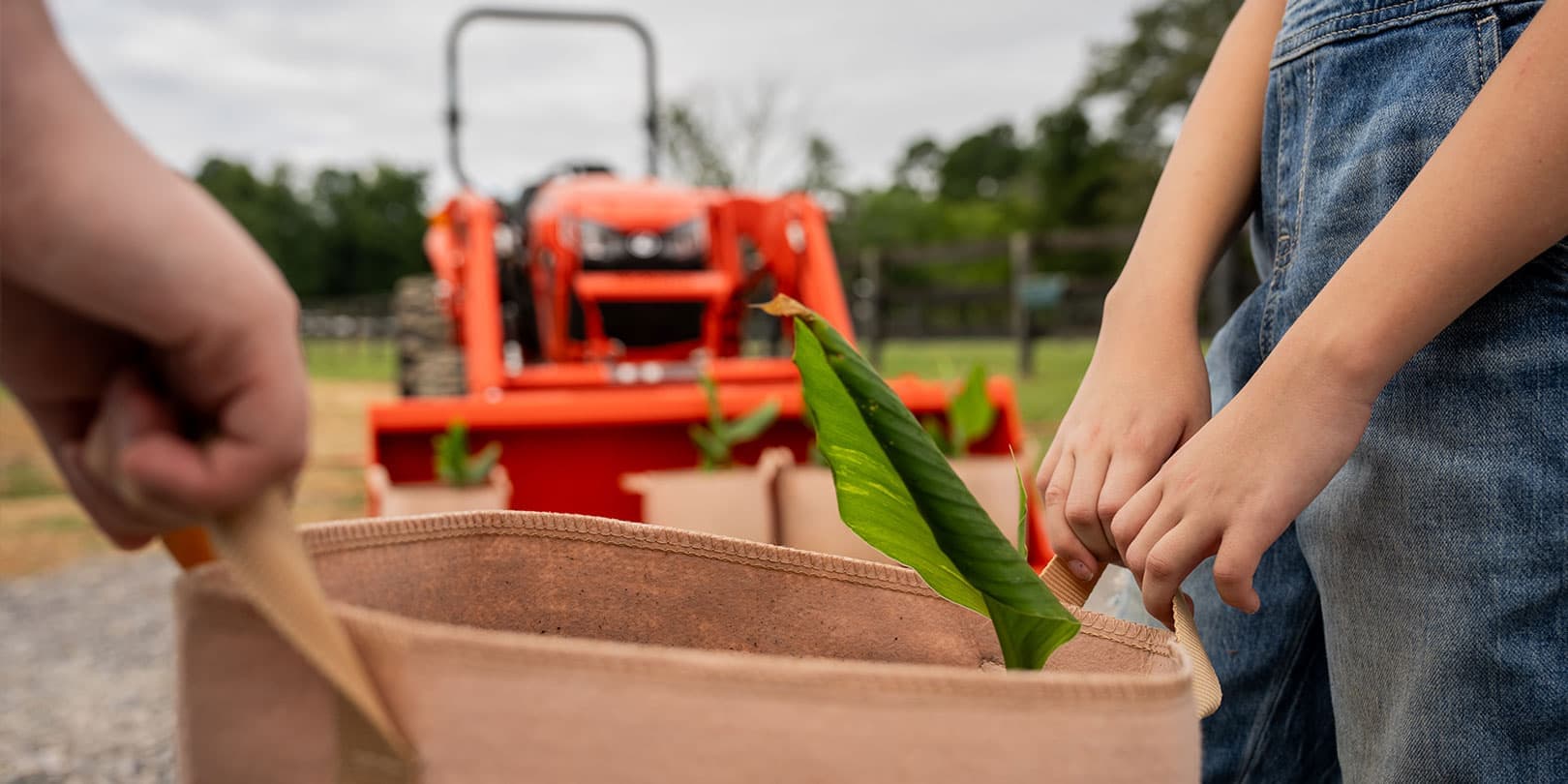
Kubota L3302
Compact
Compact reference for driveway box blades — enough frame mass for regular gravel grading when blade width stays within OEM hitch charts.
Verified specifications for Kubota L3302 Engine horsepower 33 HP Operating weight 2,833 lbs Rear hitch lift @ 24″ 1,435 lbs @ 24″ 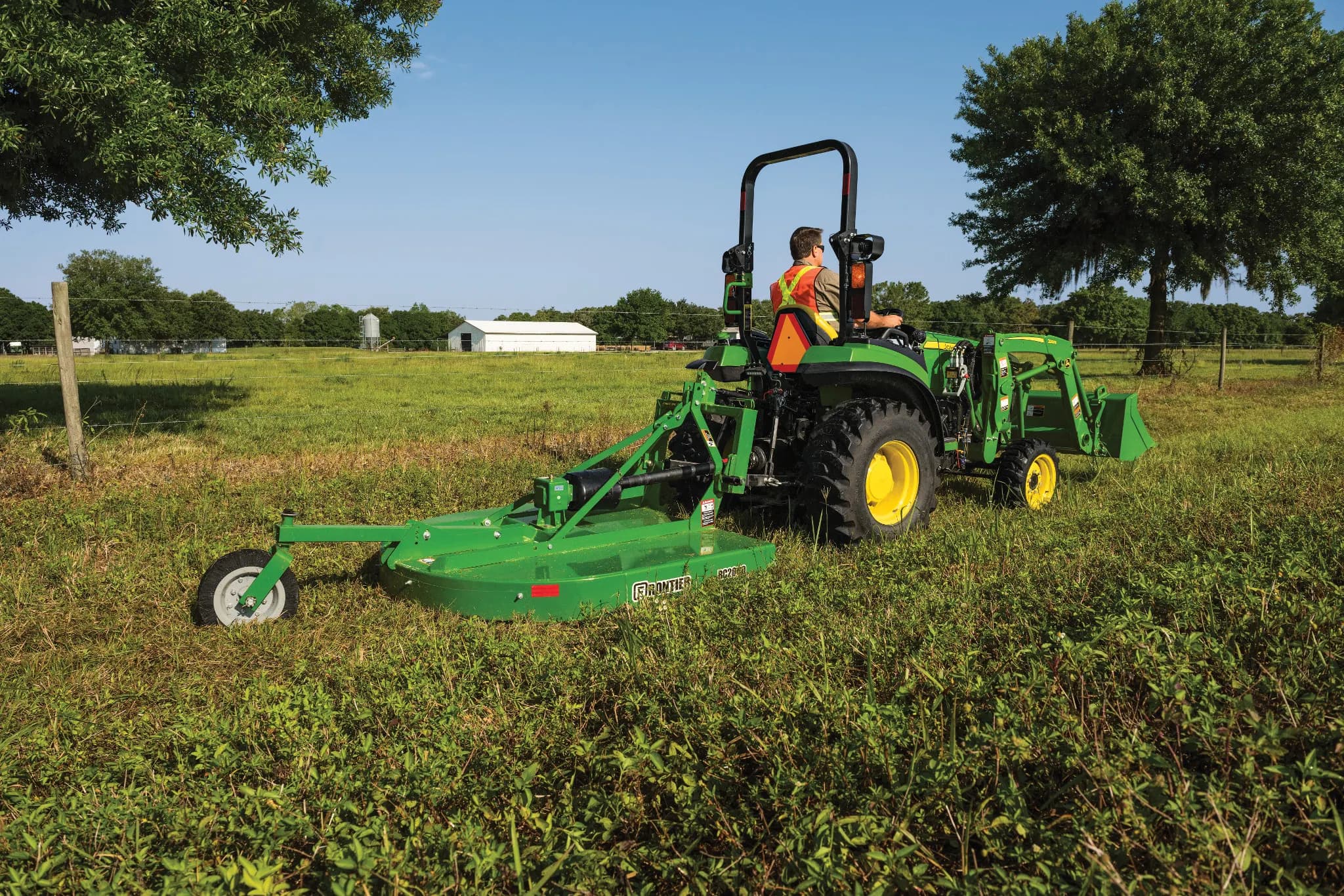
Pick 2
John Deere 2032R
Compact
Compact step-up for uneven lanes where blade loads and loader follow-up work need more stability than sub-compact frames.
Verified specifications for John Deere 2032R Engine horsepower 31.2 HP Operating weight 2,879 lbs Rear hitch lift @ 24″ 1,356 lbs @ 24″ 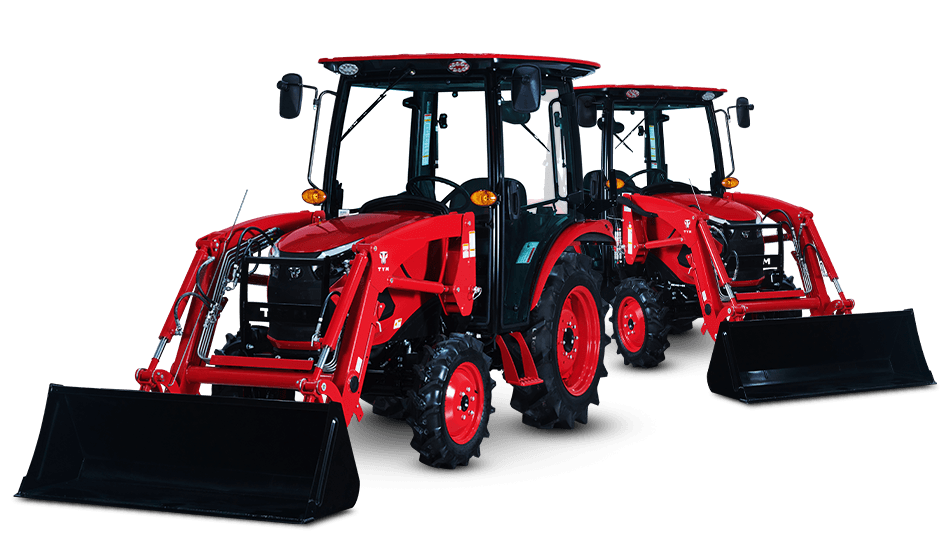
Pick 3
TYM T3035C
Compact
Mid compact example for comparing hitch lift against blade manufacturer weight and width recommendations.
Verified specifications for TYM T3035C Engine horsepower 35 HP Operating weight 3,313 lbs Rear hitch lift @ 24″ 2,425 lbs @ 24″
How size classes compare
Tractor size classes (typical range)
Sub-Compact
1–5 acres
Loader and mower
Compact
5–20 acres
Bush hog and tiller
Utility
15+ acres
Hay and heavy implements
Illustrative: match class to property size and implement load, not horsepower alone.
Blade width vs. tractor mass
Box blades cut and redistribute material across their width. Too wide for a light frame causes hopping and poor crown control — especially on slopes. Start from the blade maker recommended tractor class and hitch category, then confirm lift capacity at the link arms on your OEM sheet.
Hitch capacity is the critical number
Our spec tables show rear hitch lift at the link arms — use that against implement weight plus operating load. Loader ratings are unrelated. Undersized hitches are unsafe even when the tractor can pull the blade on flat ground.
Pair with loader workflow
Grading cycles between blade passes and loader material moves. Size the tractor for both tools — see our driveway grading guide for the full maintenance pattern.
Horsepower is secondary to lift
Box blades are usually non-PTO. The binding Facts are hitch category and rear lift versus blade weight — not engine marketing. A tractor that “has enough HP” can still dump a heavy blade or feel unsafe on a crowned driveway.
Screen the blade class in Fit
Pick a curated box-blade width in the Attachment Fit checker. Compatible on paper still needs serial-year OEM confirmation and ballast discipline. Incompatible means a narrower blade or a larger tractor — not hoping the first pull works on a soft shoulder.
FAQ
- Does box blade need PTO?
- Standard box blades are pull-type without PTO — sizing is hitch and weight driven. Powered box blades are different implements with their own charts.
- Can sub-compact pull a box blade?
- Often on narrow blades and flat drives with ballast. Steep or long gravel lanes usually push buyers toward compact frames.
- How is this different from bush hog sizing?
- Rotary cutters are PTO loaded — see our bush hog horsepower guide. Box blades load the hitch and frame instead; read the right chart for each tool.
- Do I need PTO for a box blade?
- Usually no. Focus on hitch class and lift. If Fit shows Partial, the missing Fact is often hitch or lift data — look it up rather than guessing.