Cat 1 Quick Hitch Buying Guide
By Roy Messiah · Last updated: 19 July 2026
Top pick tractors in this guide
The bottom line
A Cat 1 quick hitch mounts on your tractor’s Category 1 three-point and lets you hook many implements faster. It does not increase hitch category, PTO horsepower, or rear lift capacity. Buy hardware that matches your tractor’s Cat 1 geometry and iMatch-style or ASAE hook pattern, then still verify each implement’s PTO and weight against the OEM sheets — use the Attachment Fit checker for a structured screen.
Numeric specs in pick tables come from manufacturer pages in our verified database — not from AI-generated text.
How size classes compare
Tractor size classes (typical range)
Sub-Compact
1–5 acres
Loader and mower
Compact
5–20 acres
Bush hog and tiller
Utility
15+ acres
Hay and heavy implements
Illustrative: match class to property size and implement load, not horsepower alone.
Top picks
Pick 1
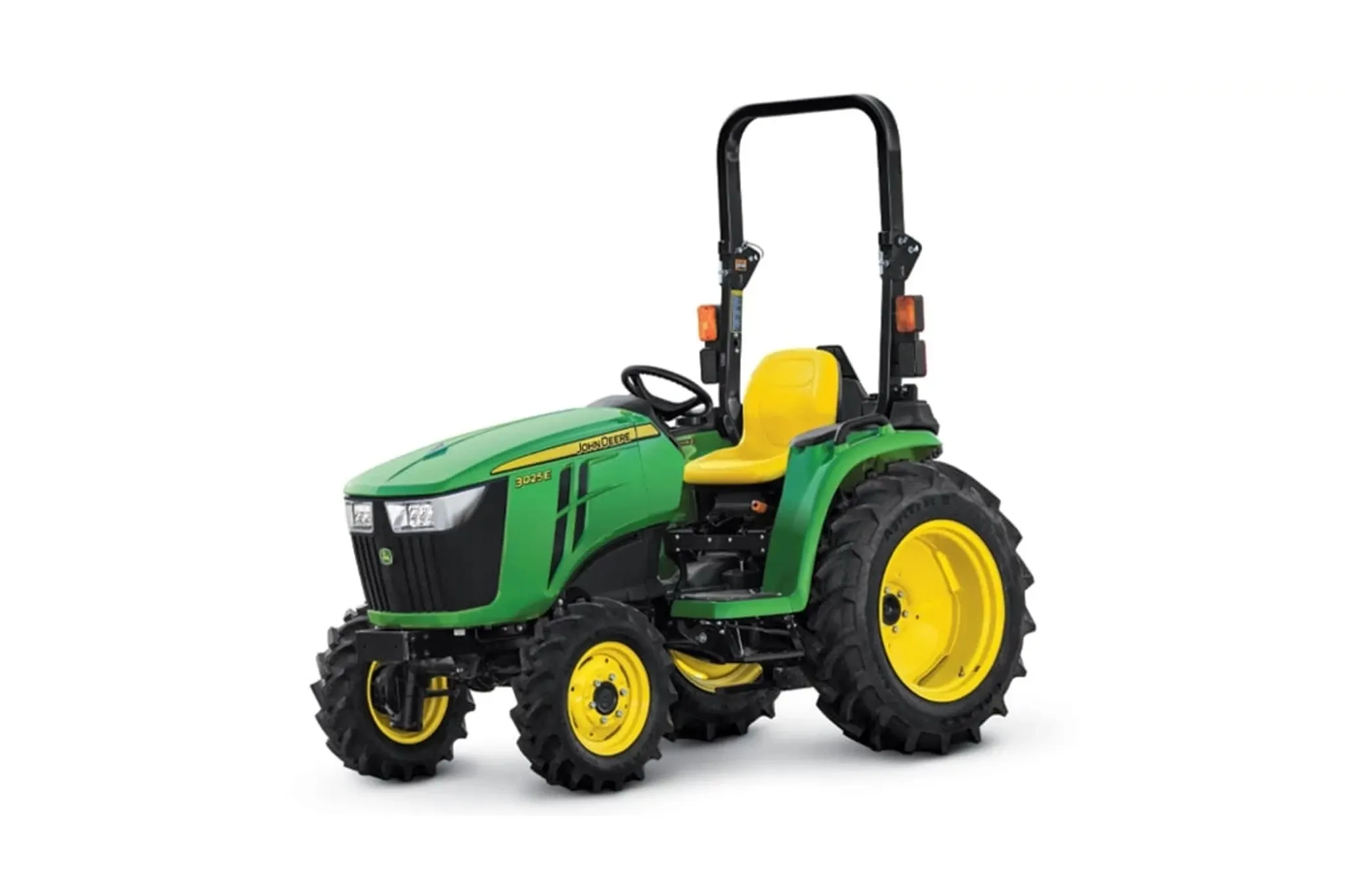
John Deere 3025E
Compact
Category I compact commonly paired with iMatch-style quick hitch shopping — useful when learning what the hitch does and does not change.
Verified specifications for John Deere 3025E Engine horsepower 24.72 HP Operating weight 2,222 lbs Rear hitch lift @ 24″ 1,356 lbs @ 24″ 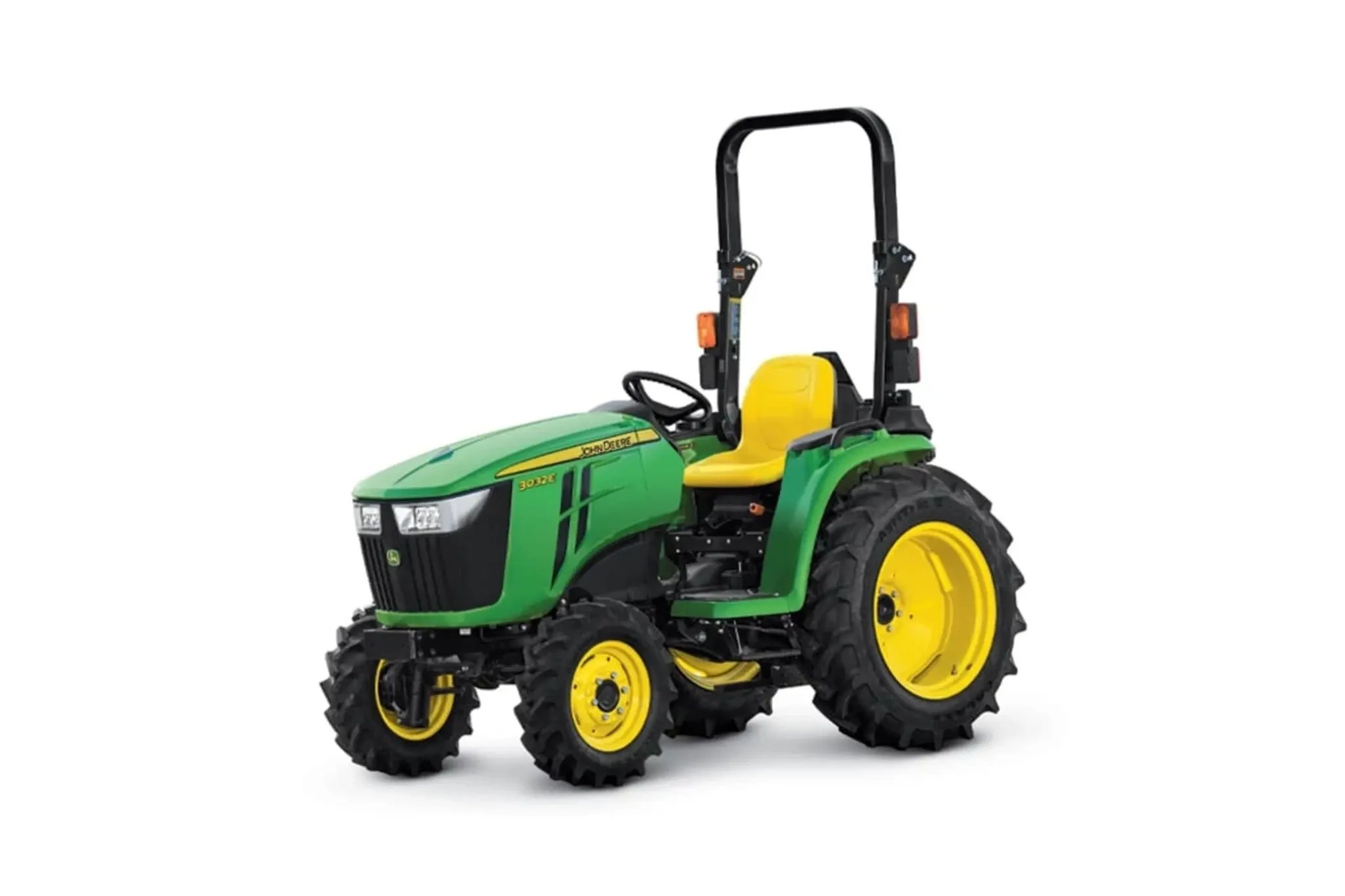
Pick 2
John Deere 3032E
Compact
Mid compact with enough hitch headroom that buyers often add a Cat 1 quick hitch for frequent implement swaps.
Verified specifications for John Deere 3032E Engine horsepower 31.1 HP Operating weight 2,222 lbs Rear hitch lift @ 24″ 1,356 lbs @ 24″ 
Pick 3
Kubota L3902
Compact
Larger compact reference for owners who change blades and cutters often and need honest limits after installing a quick hitch.
Verified specifications for Kubota L3902 Engine horsepower 37.5 HP Operating weight 2,778 lbs Rear hitch lift @ 24″ 1,435 lbs @ 24″
What a Cat 1 quick hitch actually does
The quick hitch becomes the interface between your three-point arms and the implement’s hitch pins. Hooks or jaws catch the implement so you spend less time lining up pins on the ground. Convenience is the product — rated capability still comes from the tractor and implement OEM charts.
Match pattern and category first
Confirm your tractor is full Category 1 (not only Limited Cat I) before assuming every Cat 1 quick hitch and implement will play nicely. Brand-native systems (iMatch-style) and universal ASAE-style frames differ in hook geometry. Read both the tractor and hitch manuals; “Cat 1” on the box is necessary but not sufficient.
What the quick hitch never fixes
Short PTO horsepower, wrong PTO speed, or weak rear lift stay unsolved after installation. A heavier quick hitch frame also consumes a little lift capacity and can change ballast needs on slopes. Screen candidates with the Fit checker, then re-check lift with the hitch weight included in your judgment.
Buying checklist
Verify tractor hitch category on the OEM sheet. Choose a Cat 1 quick hitch whose hook pattern matches your implement fleet. Confirm top-link and sway hardware still work. Keep implement requirement sheets for PTO and weight. When in doubt, prefer fewer, correctly rated tools over a wider cutter that only pins because of adapters.
FAQ
- Is a Cat 1 quick hitch the same as Category I?
- Cat 1 and Category I are the same ASAE tractor hitch class. A Cat 1 quick hitch is hardware designed to sit on that class — it is not a different hitch category.
- Will a quick hitch make my tractor lift more?
- No. Lift ratings stay with the tractor. The hitch frame can even reduce usable margin slightly because it adds mass ahead of the implement.
- Do I need a brand-native quick hitch?
- Brand-native systems can simplify matching within one OEM implement family. Universal frames may cover more mixed fleets if the hook pattern matches. Either way, verify each tool’s PTO and weight.
- Can Limited Cat I tractors use Cat 1 quick hitches?
- Only when the hitch and implement OEMs explicitly support Limited Cat I or your sub-compact geometry. Shared pin family is not a green light.