Best Tractor for Steep Hills
By Roy Messiah · Last updated: 19 July 2026
Top pick tractors in this guide
The bottom line
Steep hills demand four-wheel drive, adequate frame mass, and conservative implement sizing — not maximum horsepower on paper. Compact or utility class with proper ballast beats an undersized sub-compact spinning tires or an oversized machine you cannot maneuver safely on side slopes.
Numeric specs in pick tables come from manufacturer pages in our verified database — not from AI-generated text.
Top picks

Pick 1
Kubota LX3520
Compact
Compact with weight and hitch capacity for hillside mowing and loader work — stable platform when traction and ballast are set correctly.
Verified specifications for Kubota LX3520 Engine horsepower 34.9 HP Operating weight 2,191 lbs Rear hitch lift @ 24″ 1,962 lbs @ 24″ 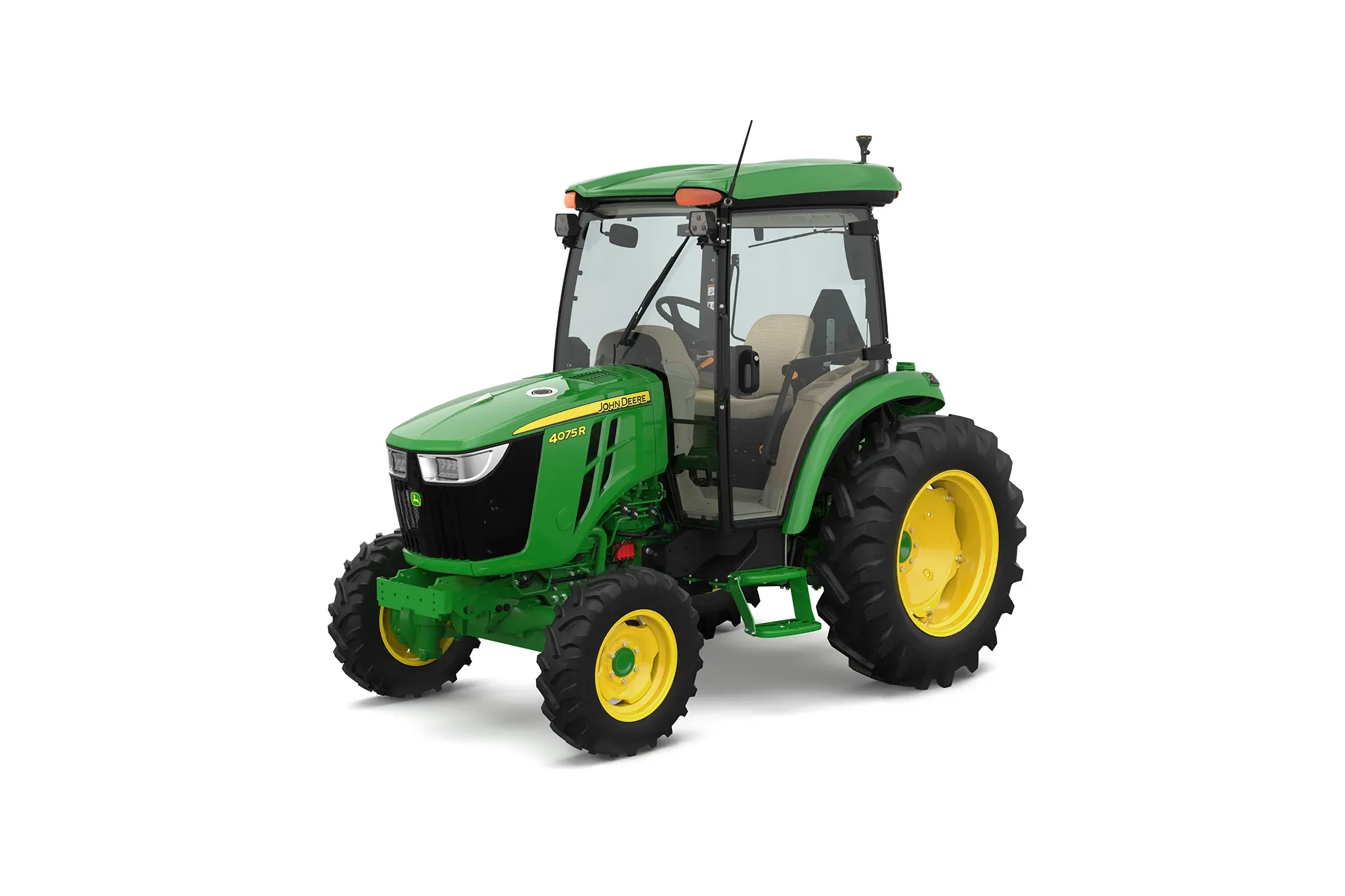
Pick 2
John Deere 4075R
Compact
Heavier compact utility crossover for steep pasture and lane work where frame mass and four-wheel drive matter more than minimum footprint.
Verified specifications for John Deere 4075R Engine horsepower 74.3 HP Operating weight 4,828 lbs Rear hitch lift @ 24″ 2,500 lbs @ 24″ 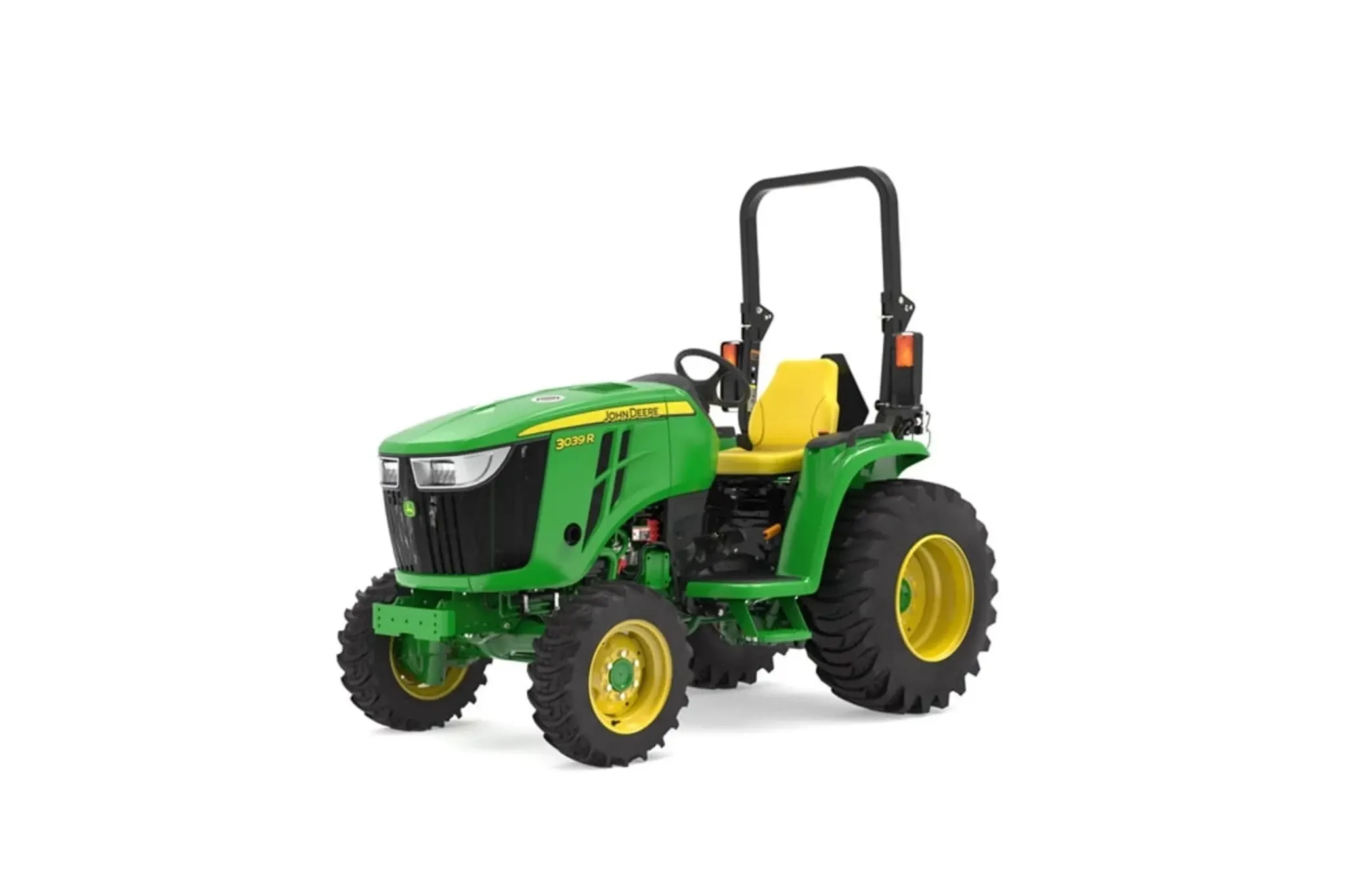
Pick 3
John Deere 3039R
Compact
Capable compact reference for mixed hillside chores when slopes are regular but transport width must stay manageable.
Verified specifications for John Deere 3039R Engine horsepower 38.2 HP Operating weight 3,005 lbs Rear hitch lift @ 24″ 2,194 lbs @ 24″
How size classes compare
Tractor size classes (typical range)
Sub-Compact
1–5 acres
Loader and mower
Compact
5–20 acres
Bush hog and tiller
Utility
15+ acres
Hay and heavy implements
Illustrative: match class to property size and implement load, not horsepower alone.
Traction beats brochure power
Hills load tires and PTO simultaneously. Four-wheel drive, weight distribution, and tire choice determine whether you climb safely — not engine rating alone. See our four-wheel-drive vs. two-wheel-drive guide for tradeoffs on flatter sections.
Implement sizing on slopes
Wider cutters and heavy rear loads reduce stability on side hills. Size implements with margin and use downhill-aware technique. Undersized tractors are unsafe; oversized implements on modest frames are equally risky.
Loader work on grades
Loaders raise the center of gravity. Ballast rear ballast when lifting on slopes and avoid turns with raised loads. Sub-compacts can work on mild grades; steeper regular work usually points to heavier compact frames.
Weight and ballast beat peak HP
On grades, operating weight, tire choice, and ballast matter more than a few engine horsepower. Loader work uphill needs a plan for rear ballast — Claims grounded in OEM ballast charts, not invented numbers.
Implement Fit still applies
A cutter or blade that barely clears lift on flat ground can overload a light tractor on a slope. Prefer Compatible Fit rows with lift headroom, then confirm OEM slope and ballast guidance.
FAQ
- Is two-wheel drive ever OK on hills?
- On gentle, dry slopes with light implements, sometimes. Steep or wet hills strongly favor four-wheel drive — treat traction as a safety item, not a luxury.
- Do I need a cab for hillside work?
- Cabs add rollover protection structures on many models — verify ROPS configuration on the exact build. Open stations are common but demand strict seatbelt and slope discipline.
- Can I bush hog steep pasture?
- Only with matched cutter size, adequate PTO, and terrain you can traverse safely. Many hillside owners use smaller cutters and multiple passes instead of maximum width.
- Is 4WD mandatory on hills?
- Strongly preferred for loader and hillside traction. It does not replace hitch/PTO/lift Fit checks.